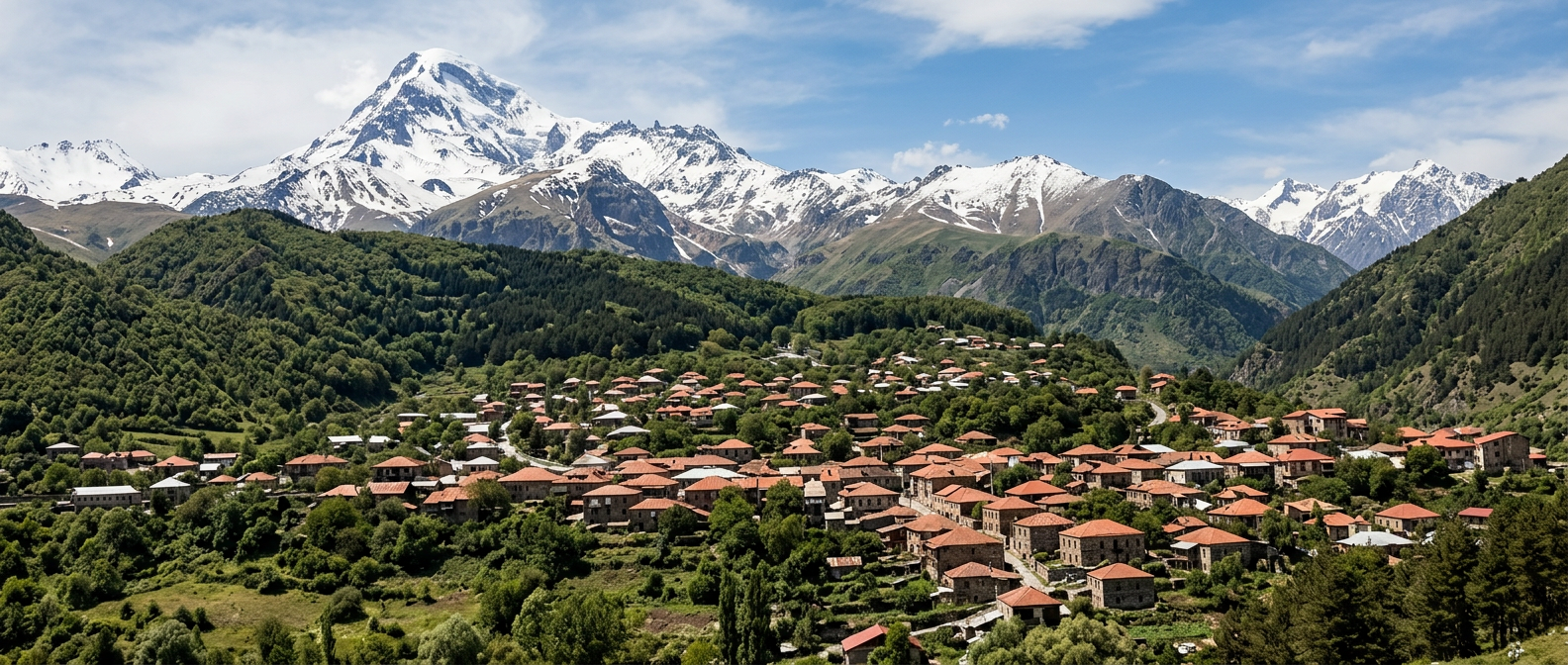
lattice glass, mutton in clay pots, hazelnuts sacked at the roadside
Reserve nine nights in Sheki and the Greater Caucasus, Azerbaijan
Nine nights along the Ganikh valley with all rooms held, a car and driver kept for your party alone from arrival to departure and a guide on four of the nine days, from $3,719 per person. Four of the nights are in Sheki at 2,290 feet, two at Ilisu, two over the watershed at Lahij and one among the vineyards at Shamakhi. The valley runs southeast for about a hundred and thirty miles under the south wall of the Greater Caucasus, and every town on it stands where a river comes out of the range onto its own gravel fan.
Send a booking requestThe Pine Gazette answers every request within one business day.
Reserve nine nights in Sheki and the Greater Caucasus and what you are holding is a guide on four days out of nine. Those four are the days when the ground decides things: two above Ilisu on the climb toward the main ridge, one on the old track above Lahij, one on the river path behind Kish. On the other five the car and the driver are yours, you have a telephone number, and the day goes the way you decide it goes. Rooms are held for all nine nights and every transfer is set.
The trip sits almost entirely in one valley. The Ganikh runs southeast for about a hundred and thirty miles under the south wall of the range, and the towns strung along it stand on the fans their own rivers built. Sheki is the largest and takes four nights. Ilisu is thirty eight miles northwest, an hour and ten minutes by road, and takes two. Lahij costs a spur south over the watershed, two nights at 4,270 feet. The last night is at Shamakhi in the vineyards, which turns the final morning into a two hour run to Baku instead of a five hour one.
Nine nights is what this stretch asks for. Sheki fills three full days if you want the palace, the lattice workshop, the church at Kish and a slow morning in the covered market. Ilisu needs two nights because the walk that matters leaves at seven and returns near five. None of the five rungs is better than the others; they differ in how much of the day somebody else is holding, and this one holds four of the nine.
A guide for the days that need one and nobody at all for the rest. Rooms and transfers are still arranged end to end.
No rung is better than another. Each one is a different amount of work for the traveller and a different figure.
- What it costs
- Nine nights, from $3,719 per person.
- What this reserves
- On this rung Pine Gazette Bookings LLC books all nine rooms, the car and its driver for the whole period, the guide for the four mountain days, the two suppers that have to be ordered a day ahead because of the cooking time, and the border zone list and park registration the operator files; it books no air ticket and it handles no money of any kind.
- Shape of the booking
- One reservation covering nine nights of twin share beds in four separate houses, one car with a driver held for your party alone across roughly 520 road miles, a guide on four days, breakfast every morning and dinner on six evenings, with the names of the party filed in advance for the controlled ground above Ilisu.
- Who books it
- Somebody reserving this wants a person who knows the ground on the days where knowing it changes the outcome, and five days when nobody tells them what time to be downstairs.
- Why somebody chooses another rung
- None of the five rungs is better than the others: if you would rather have the same guide beside you every morning and never work out where lunch is coming from, rung one carries one on all nine days, and if you want only the beds and the car and intend to find your own walking, a later rung costs less for the same nine nights.
- In the figure
- Nine nights of rooms, twin share: four in a family guesthouse in the old town at Sheki, two in a stone house at Ilisu, two at Lahij with a wood stove in the room and one among the vineyards at Shamakhi; breakfast every morning and dinner on six of the nine evenings; the two clay pot suppers at Sheki, which are ordered in the morning because they sit in the tandir most of the day; one car with a driver held for your party alone from arrival to departure, about 520 road miles in all; a guide who speaks English on four days, being two above Ilisu, one above Lahij and one on the river track behind Kish; the border zone list and the national park registration, filed by the operating company before you land; entry to the palace inside the fortress wall and to the church at Kish; an hour in a lattice workshop with the man who cuts the bars; bottled water kept in the car for each day it is out; every road transfer between Baku and the valley, outward and back.
- Not in the figure
- Round trip airfare from the American South to Baku, which is yours to arrange, usually $1,050 to $1,900; lunch on all nine days, $5 to $12 each; dinner on the three evenings that are not included, $9 to $18; tips for the driver and the guide across nine days, $110 to $170 from the party; a room to yourself where the house has one free, $340 to $470 for the nine nights; copper bought off the street at Lahij, $20 to $260 a piece; halva, hazelnuts and dried cornel from the covered market, $3 to $9 a bag; laundry done by the guesthouse, $4 to $9 a load; a local SIM with data, $7 to $14; boots and a wind layer if you do not own them, $130 to $420; an extra night in Baku at either end, $45 to $120 a room.
- Who should not book it
- The two Ilisu days are nine and eleven miles, the first with 3,200 feet of climb on wet leaf litter and loose stone, and nobody sits one of them out in the village, because the guide walks with the party and not with whoever stayed behind. The road into Lahij is twelve miles of single lane shelf above a gorge with passing places blasted out every few hundred yards, and there is no second way in or out. Houses in the old town at Sheki and along the street at Lahij have stairs to every bedroom, thin walls and hot water off a tank that empties, and Lahij at 4,270 feet drops to about 46 degrees at night in September with a wood stove you feed yourself. Three of the nine days have nothing scheduled in them on purpose, and anyone who wants the whole day accounted for from breakfast onward will find those three long.
This is a starting figure, worked out for two people sharing a room. Costing the exact days you name runs two to four working days, since the firm operating the trip has to answer first. No air ticket is ever inside it.
Sheki under the fortress wall
The old town climbs a slope below a wall of brick and river stone, and its lanes are cobbled with rounded stones the size of a fist, laid tight and slick for an hour after rain. Inside the wall stands the palace finished in 1797: two floors, six rooms, and a south front that is more window than masonry. The lattice is small wooden bars slotted together under tension with colored glass held between them, about five thousand pieces to a square meter, and there is no nail and no glue in any of it. Three or four families still do it, and in the workshop below the wall a man cuts bars on a treadle saw; a panel the size of a door takes him six weeks.
Silk is the other trade. Mulberries line the road toward Oguz, cocoons come down from the villages from the last week of May through June, and the sheds work scarf cloth and lining. Eating is fixed to two things and both take time. Piti is mutton on the bone with chickpeas and a knuckle of tail fat, sealed into a clay pot and left in a wood fired tandir most of the day; it arrives as one pot and is eaten as two courses, the broth first, poured over torn bread, then the meat and chickpeas mashed with sumac in the emptied bowl. Rice flour batter is run through a perforated dipper onto a hot plate so it sets as a lattice, the sheets are stacked with ground hazelnut and coriander seed, pressed, cut into diamonds and soaked in saffron syrup. That is sold warm and by weight from about eight in the morning until the tray is finished.
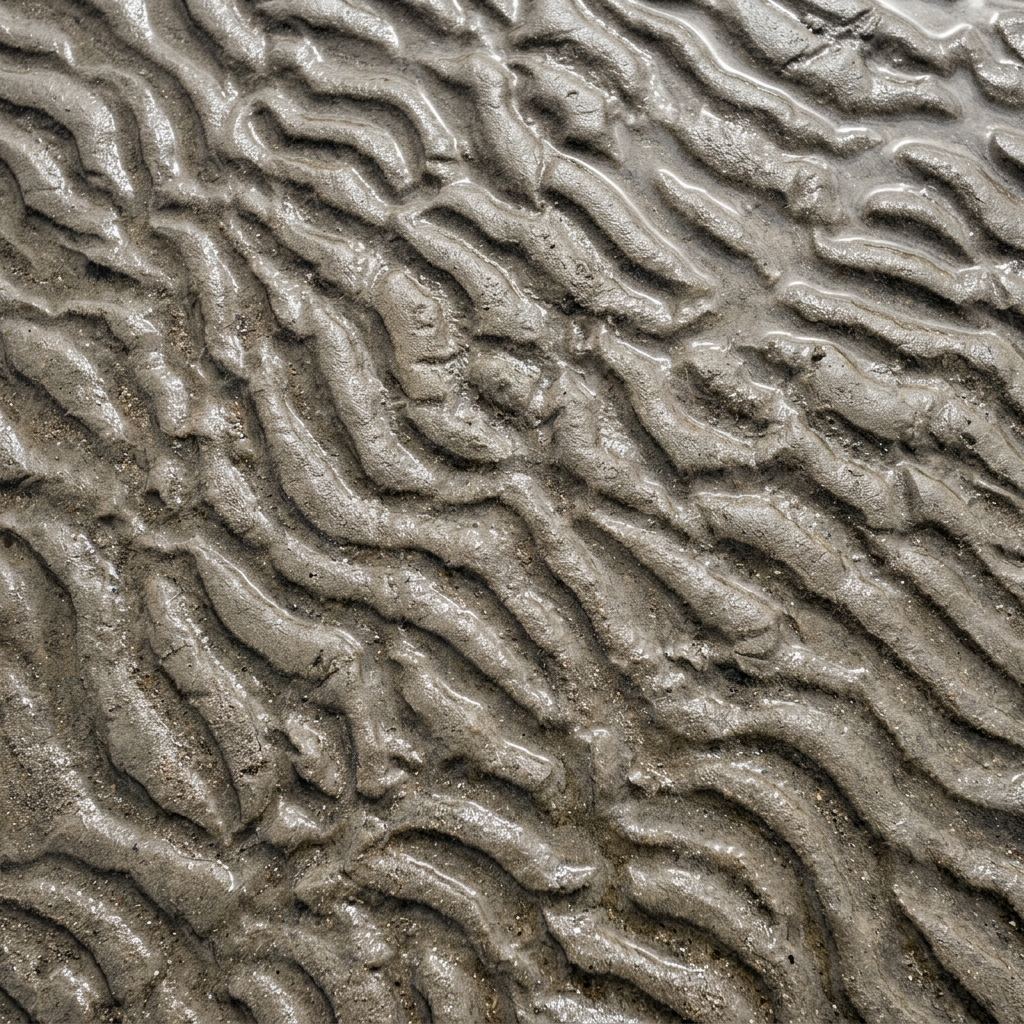
Two days above Ilisu, and the list that goes in ten days early
Ilisu is a village of stone houses at 3,280 feet where the Kurmukh comes out of a slot in the range. A square eighteenth century tower stands over the upper quarter, three stories, its base walls a yard thick and its stair too narrow for two people to pass. Below the houses a stone bridge carries two arches over the river and is still how the tractors cross. Two miles up the track behind the village the water drops about sixty five feet in two steps into a pool that holds around 48 degrees through the summer, and people get into it anyway for as long as they can bear.
Both guided days start from the village door. The first climbs the left bank through hornbeam and beech and comes out on hay meadow at about 6,500 feet in three and a half hours, with the crest of the main ridge across the head of the valley and snow on its north faces into July. Nine miles round, 3,200 feet of gain, and the last mile down is on loose ground. The second day is longer and flatter, up the valley floor with four fords and none of them bridged, past two summer camps where the milk is worked into cheese in a shed with a fire under the floor. Eleven miles, about 1,400 feet, back for a late lunch.
The crest above you is a state border, so the upper valley is controlled ground. The operating company puts the names of the party and their document numbers in front of the border service about ten days ahead and files the national park registration in the same envelope. That is part of running the trip and it is done for you.
- April
- Snowmelt browns the rivers, the fords above Ilisu run too deep for the second walking day, and the valley orchards are in blossom.
- May
- Warm and wet, one of the two heaviest months for rain, and the first cocoons reach Sheki from the villages.
- June
- Fifteen hours and ten minutes of daylight at the solstice, the meadows at 6,500 feet clear, the ridge white on its northern side.
- July
- About 84 degrees by day at Sheki and 64 at night, hay cut on the terraces above Ilisu, tandirs lit before six.
- August
- Hazelnut harvest across Qakh and Zaqatala, whole families in the orchards, sacks at the roadside, the high ground firm underfoot.
- September
- The second wet month, twelve and a half hours of daylight by its end, grapes off the terraces at Shamakhi, nights near 46 degrees at Lahij.
- October
- Persimmons left on bare branches and hung to dry along the balconies, beech turning copper behind Kish, days around 68 degrees.
- November to March
- The valley road stays open, the high tracks above Ilisu do not, and the copper shops work with their doors shut.
Lahij, the copper street and the twelve mile shelf
The turn for Lahij leaves the Baku road near Ismayilli and becomes a shelf cut into the side of the Girdiman gorge within half a mile: twelve miles of it, one vehicle wide for most of the distance, passing places blasted out every few hundred yards and the river a long way below on the right. Fifty minutes, and the driver takes it slowly. When the river takes a bite out of the shelf in spring, which it does most years, the village waits for a machine to come and put it back.
What you arrive at is about a thousand people at 4,270 feet in houses of river stone with timber laced through the walls in courses, which is how the place stayed up through the earthquakes that flattened Shamakhi twice. Copper is worked along the main street: trays, water jugs, ladles, beaten over a stake anvil and tinned inside over a flame. Between about nine and six the sound comes off three or four shops at once and carries the length of the street. The guided day goes up the old path above the village, past three water mills of which one still turns, and gains about 1,900 feet in four miles to a shoulder where the trench the river has cut lies open below you. Seven miles round, back by early afternoon.
What is held, who writes the contract, and how the figure is built
The Pine Gazette takes the request and places it with the company that runs this valley on the ground. The office is at 2450 Severn Avenue, Suite 312, New Orleans, LA 70001, and Pine Gazette Bookings LLC is the name on the paperwork, registered in Metairie, Louisiana. Not one bed, not one car and not one guide named anywhere on this page belongs to it. What it does is put your dates in front of the operator, hold the four houses against them, and get all nine nights onto a single sheet before you agree to anything. That operator writes the contract with you and invoices you on its own account. Nothing is paid to this office or through it, in any form.
Costing a specific set of dates takes two to four working days. The guide is quoted against the days you actually named rather than off a printed rate, and the two houses at Ilisu confirm by telephone, which happens when somebody walks up the slope to where the signal is. Give us a month and a party size on +1 (504) 832-6194 or at bookings@thepinegazette.com and the figure comes back with a plain list of what sits underneath it. If a name is spelled wrong afterward, or a date has to move, corrections@thepinegazette.com reaches the same people.
No air ticket is written here. Getting yourself to Baku is your own arrangement, and what we will tell you is the day you need to be on the ground and the earliest morning you can leave, so neither end of the nine nights is spent on the Shamakhi road in the dark. Anything sent in on the form below gets an answer the next working day.
Send a booking request
This form takes booking requests 24 hours a day. A person reads it and answers within one business day. Sending it is not a reservation, it costs nothing, and this office will not telephone or text you unless you ask it to.