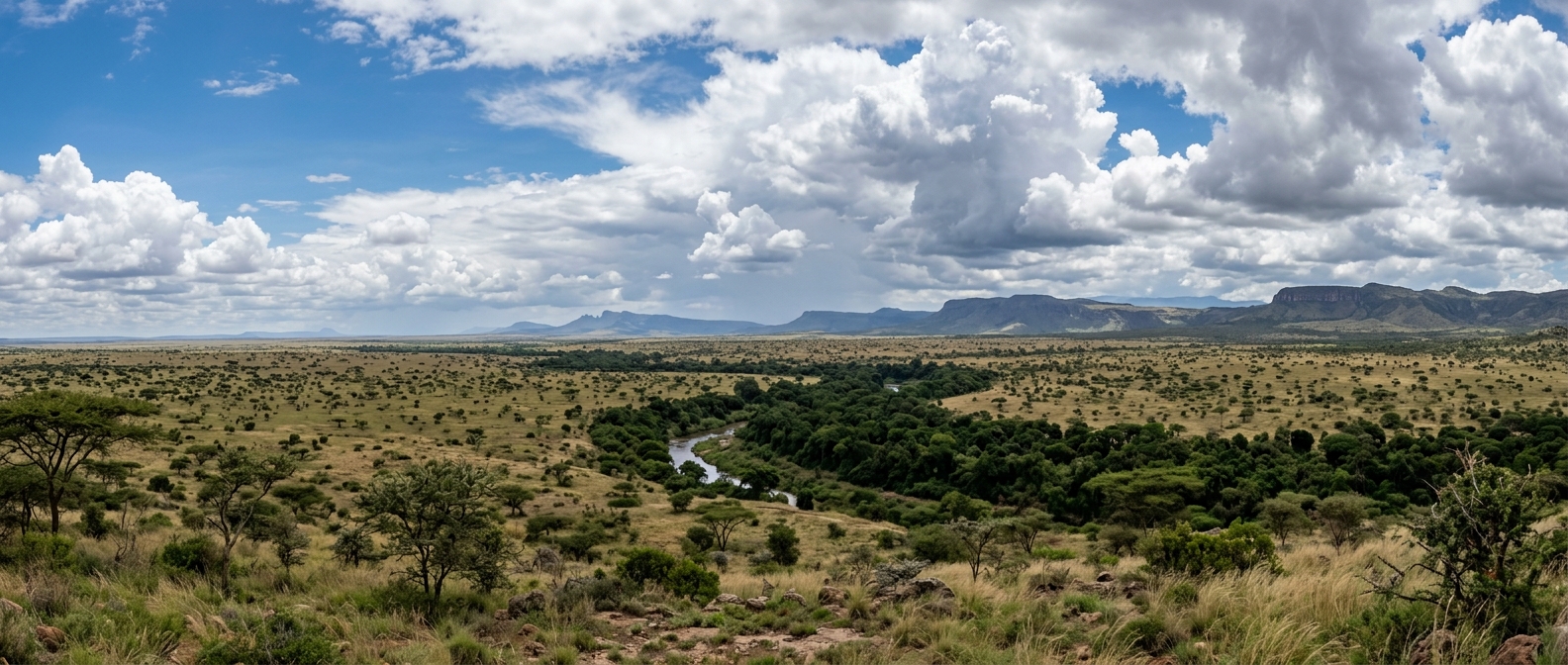
laterite dust, black water, and the pontoon closing at six
Reserve a guided Rupununi trip in Guyana, thirteen nights of savannah and river
The Pine Gazette reserves thirteen nights in the Rupununi from $6,545 per person on two sharing, with a guide alongside the party on every one of those days and each village stay agreed with its council beforehand. Region 9 is the far southwest of Guyana, one road in, savannah on both sides of a mountain range, and villages that keep their own record of who is allowed to sleep on their land. Somebody meets the party on the coast and somebody is waiting at every handover after that.
Send a booking requestThe Pine Gazette answers every request within one business day.
Reserve a guided Rupununi trip in Guyana and what you are paying for is thirteen days of arranging that is genuinely awkward to do from a laptop in New Orleans. Region 9 has one road running through it, almost no traffic that is not hauling freight to Brazil, and communities that decide among themselves who may stay overnight. On this rung a driver is holding your name on the coast when you land, a guide moves with the party for all thirteen days, and every handover from vehicle to boat to village has a person attached to it long before anybody leaves LA.
The route is quick to say and slow to do. One night on the coast, two inside the forest reserve the road cuts through, two at Surama, three at Rewa, two at Yupukari, two at a cattle ranch under the Kanuku Mountains, then one long push north for a final night back where you started. Six places to sleep, all six held in the party name, and nobody in the group ever needing to work out where the next bed is coming from.
None of it belongs to Pine Gazette Bookings LLC. Not a truck, not a boat, not a hammock hook screwed into a thatch roof. What this office does is assemble the reservation and hold it in your name; the company that actually runs the thirteen days invoices you itself, on its own contract, once the dates are fixed. Reaching the country is yours to sort out, no airfare is sold here, and the figure below does not contain any.
Somebody is waiting at arrival, a guide is with the party most days, and every transfer and entry is held in advance.
No rung is better than another. Each one is a different amount of work for the traveller and a different figure.
There are five rungs and the site does not pretend that one of them is the correct one. This is the first: met at every point, guided every day, nothing left for you to organize once your boots are on the ground. Further along the chain fewer pieces are reserved, a trip of the same length costs less, and more of the phoning falls to the traveller. Naming exact dates and putting a figure against them takes two to four working days here, because each village council answers separately about beds and permission, and the ranch answers by radio in the evening or not until tomorrow.
- What it costs
- 13 nights, from $6,545 per person.
- What this reserves
- On this rung The Pine Gazette reserves the entire thirteen nights as one booking, six places to sleep, the guide, the village council permissions, all road and river movement and every meal, and it reserves no airfare at any point and settles nothing you spend once you are there.
- Shape of the booking
- Held as a single reservation: six places to sleep across thirteen nights, twin rooms at four of them and two hammocks under one thatch at the other two, seven road and river movements, and the council permissions logged in the party name weeks before departure.
- Who books it
- Somebody reserves this because they want the Rupununi without doing any of the arranging, since a third of what makes these thirteen days work happens over two way radio or through a person standing in the village.
- Why somebody chooses another rung
- If you would rather choose your own days, sit still in one place for a week and be guided only when you ask for it, a rung further along the chain reserves the beds and the boat crews and hands the rest of the calendar back to you.
- In the figure
- thirteen nights of lodging, twin rooms at four stops and two hammocks slung under the same thatch at the other two; All meals, starting with dinner that first evening and ending at breakfast on the fourteenth morning; treated drinking water at every stop and on every outing; a guide travelling with the party on all thirteen days; a village guide additionally at Surama, Rewa and Yupukari; all road legs in the operating company vehicles, including the eighteen hour run back north at the end; the vehicle pontoon over the Essequibo at Kurupukari in both directions; every river leg, run by the operating company on its own river licence and billed by that company; the council permissions for sleeping on titled Makushi land; forest reserve entry and use of the canopy walkway; two dawn outings for anteater in the south savannah and two night outings on the river at Yupukari; laundry at the ranch on the twelfth day.
- Not in the figure
- the round trip flight from the American South into Guyana, $780 to $1,340, yours to arrange, and not something sold at this counter; the single room supplement if you are not sharing, $540 for the whole thirteen nights; drinks other than the water, tea and coffee served with meals, $2 to $6 each; tips for guides, boat crews and village hosts, customarily $110 to $220 per traveller over the thirteen days; a hammock and mosquito net if you do not already own one, $60 to $140; rubber boots and a dry bag, $35 to $95; craft bought from the weavers at Surama and Yupukari, $10 to $140; a local data card, which works in four of the six places you sleep, $12 to $25; an extra night on the coast at either end if your own timings demand one, $95 to $170 a room; everything you buy on the ground, which you settle yourself in cash.
- Who should not book it
- The road is the part people underestimate: the return leg is eighteen hours in a single day on laterite corrugations with two stops, and no version of these thirteen nights avoids it. Nothing on the route is air conditioned, the vehicles run with the windows down and the dust in, and shade temperatures sit in the mid nineties through the middle of the day from February to April. Two stops sleep in hammocks, the boat legs run four to six hours on plank seats with no cover, and between Rewa and Yupukari there is no phone signal for six days. If an afternoon with nothing at all scheduled between ten and half past three, in silence, an hour from the nearest other building, reads to you as a day thrown away, one of the shorter trips will suit you better.
This is a starting figure, worked out for two people sharing a room. Costing the exact days you name runs two to four working days, since the firm operating the trip has to answer first. No air ticket is ever inside it.
The road south and the crossing at Kurupukari
The coast to the border town of Lethem is roughly 335 miles. Sixty five of those are asphalt and the remainder is laterite: red and hard in February, greasy in June, and corrugated in a way that will loosen the fillings of anyone who tries to take it in one sitting. Trucks carrying fuel and flour to Brazil use it all night. This itinerary breaks the drive with two nights inside the forest reserve, close to a million acres of standing forest between the Essequibo and the Siparuni, and the party crosses the Essequibo on a vehicle pontoon at Kurupukari. That pontoon works in daylight only, about six in the morning until six at night, and the river at the landing is a quarter of a mile of brown water moving faster than it appears to. Arriving at ten past six means sleeping on the bank, which is why the whole day is built around reaching it by four.
Near the second night there is a walkway strung through the canopy: 154 meters of bridge on four platforms, the top one about thirty meters off the forest floor. Anyone who wants it is standing on it at a quarter to six in the morning, because mist sits in the crowns for the first hour and the birds work those same trees while it does. The other thing here is Turtle Mountain, a thousand feet of climb in about a mile and a half with two short scrambles, and from the top the forest runs to the horizon in every direction with the river bending through it.
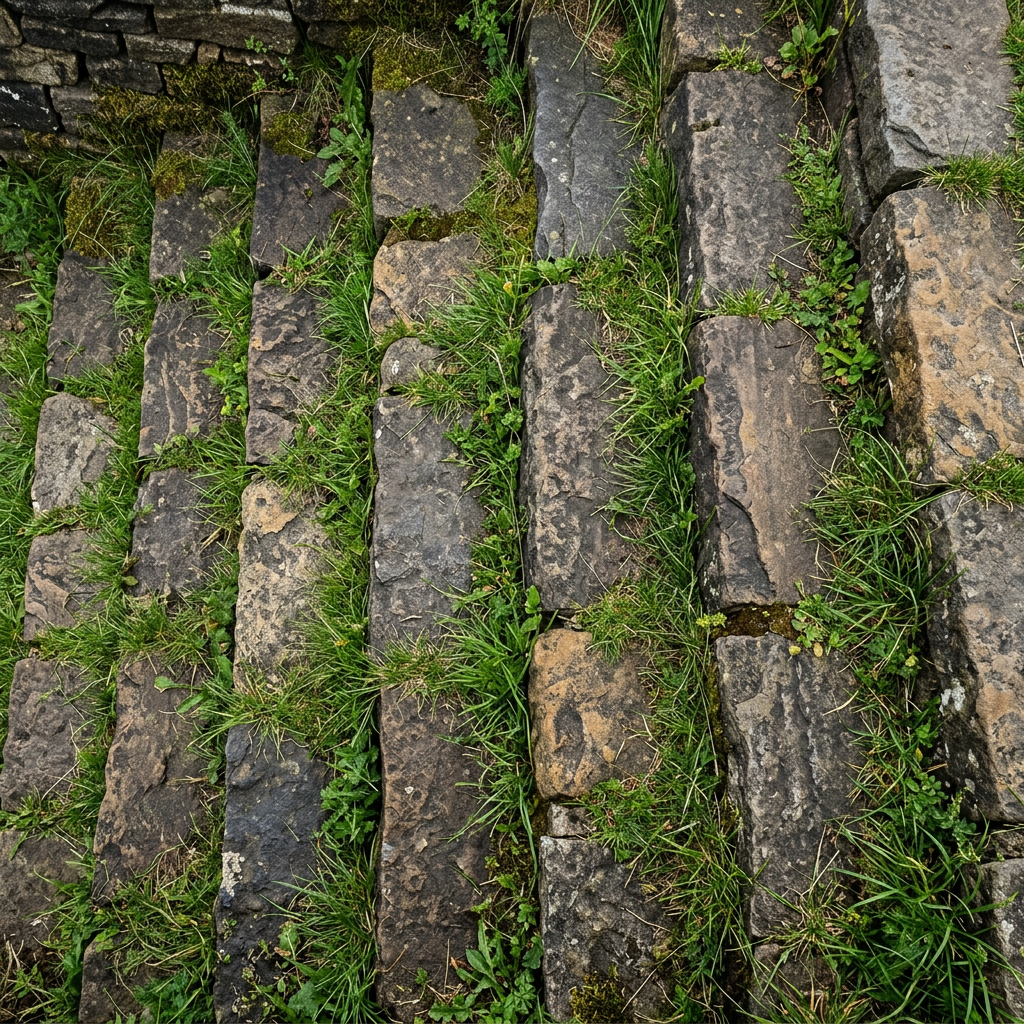
Three nights at Rewa, and what a river day is
Rewa is a Makushi village of about three hundred people where the Rewa River comes into the Rupununi. You get there by boat, four hours from the landing, and the lodging is eight cabins the village owns and runs, with the generator off at nine. The water is dark and near 82 degrees at the surface. The fish everybody comes for is the arapaima, which reaches eight to ten feet, breathes air, and surfaces every ten to twenty minutes with a cough you hear well before you see anything; villagers count them from boats through the dry months. Every river leg on this trip is operated by the company running it, under its own river licence, and appears on that company's bill. This office moves nobody on water, on land or anywhere else.
A day at Rewa is two outings and a long middle. Out at half past five while the air is still cool, back by ten, then nothing scheduled until half past three, because the hours in between are not worth walking into. Awarmie Mountain is forty five minutes of steady climbing behind the village and gives a view straight down onto the confluence, which is worth doing once. Kaboura flies work the water in the middle of the day and are gone by dusk.
- January
- Tracks hard, ponds separated, anteaters feeding in the open until about eight in the morning
- February
- The driest weeks, the river down to a chain of pools, arapaima surfacing where the channel still holds depth
- March
- Near 95 degrees in the shade by two, and dust hanging over the road a mile behind every truck
- April
- First storms late in the month, grass green within four days of real rain, the road still firm
- May
- Rain most afternoons, the laterite softening, vehicles backing up at the Kurupukari landing
- June
- The plain between Yupukari and the mountains under water, boats going where trucks went in March
- July and August
- The operating company does not run these thirteen nights at all in either month
- September
- Water dropping and the road firming, the trip running again from about the middle of the month
- November and December
- Nights near 70 degrees, mornings without wind, ranch tracks passable end to end
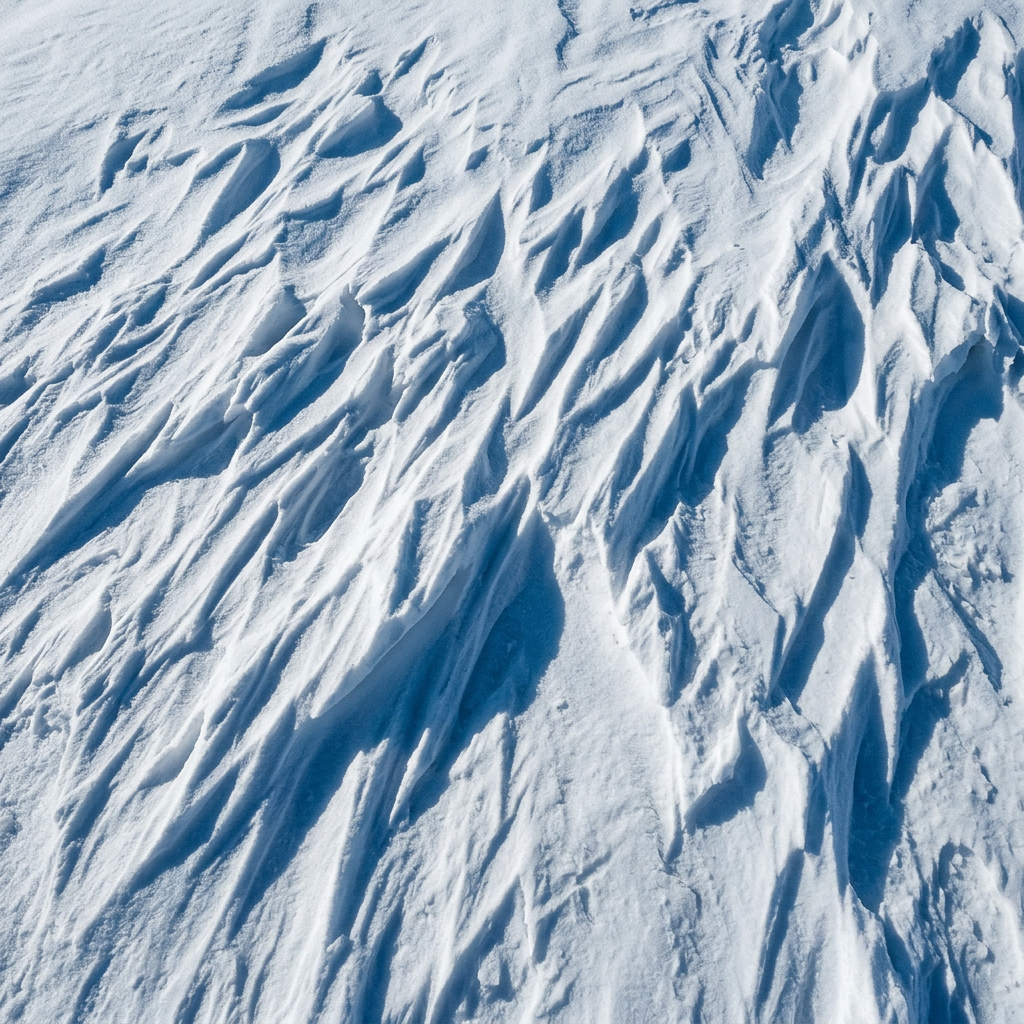
The south savannah, the ranch and the Kanuku foothills
South of the mountains the country opens out into unfenced grass, sand roads and thin creek forest, with termite mounds standing three feet high. The Kanuku range comes off the plain by about three thousand feet and holds nesting harpy eagles, whose whereabouts the ranch hands know and will not always tell you. The ranch runs cattle without fences, riders leave at half past five, and the herd is counted rather than penned. Dinner is at seven or it is not at all. The generator runs from half past six to half past nine, after which the sky takes over, and this far from any town that is a real event rather than a phrase.
Giant anteaters are why a lot of people ask for the south. They stand up to seven feet from nose to tail tip, they feed in the cool hours, and the burnt patches of February and March are where you find them, usually two hundred yards off and moving in a dead straight line. Two dawn outings are built into the ranch nights. At Yupukari the pattern flips to the dark: black caiman are measured and tagged on the river at night, the larger animals run past thirteen feet, and giant otters work the same stretch after breakfast. The lilies there put up leaves six feet across; a flower opens white at dusk, is pink by the second evening, and is finished.
The dry months, the wet months, and how the dates get fixed
The season decides more than anything else does. From the middle of September to the end of April the road holds and the savannah is passable end to end. In July and August the operating company does not run this at all, because the ground south of Yupukari is water and the queue at the Kurupukari landing runs into hours. The council permissions for staying on titled Makushi land are applied for well ahead by that same company, since applying for them is part of running the trip. This office gives no advice on documents for entering any country and none on health.
No money changes hands at Pine Gazette Bookings LLC at any stage. You give us a window and a party size, we come back in writing with dates, beds and a figure, and the company running the thirteen days bills you direct under its own paperwork. Requests reach us from all over Louisiana and the answer takes those same two to four working days wherever they start from. The phone is +1 (504) 832-6194, the address for a first message is bookings@thepinegazette.com, and if anything on a confirmed booking has to change later, corrections@thepinegazette.com goes to the same two people. The office itself is at 2450 Severn Avenue, Suite 312, Metairie, LA 70001.
Send a booking request
This form takes booking requests 24 hours a day. A person reads it and answers within one business day. Sending it is not a reservation, it costs nothing, and this office will not telephone or text you unless you ask it to.