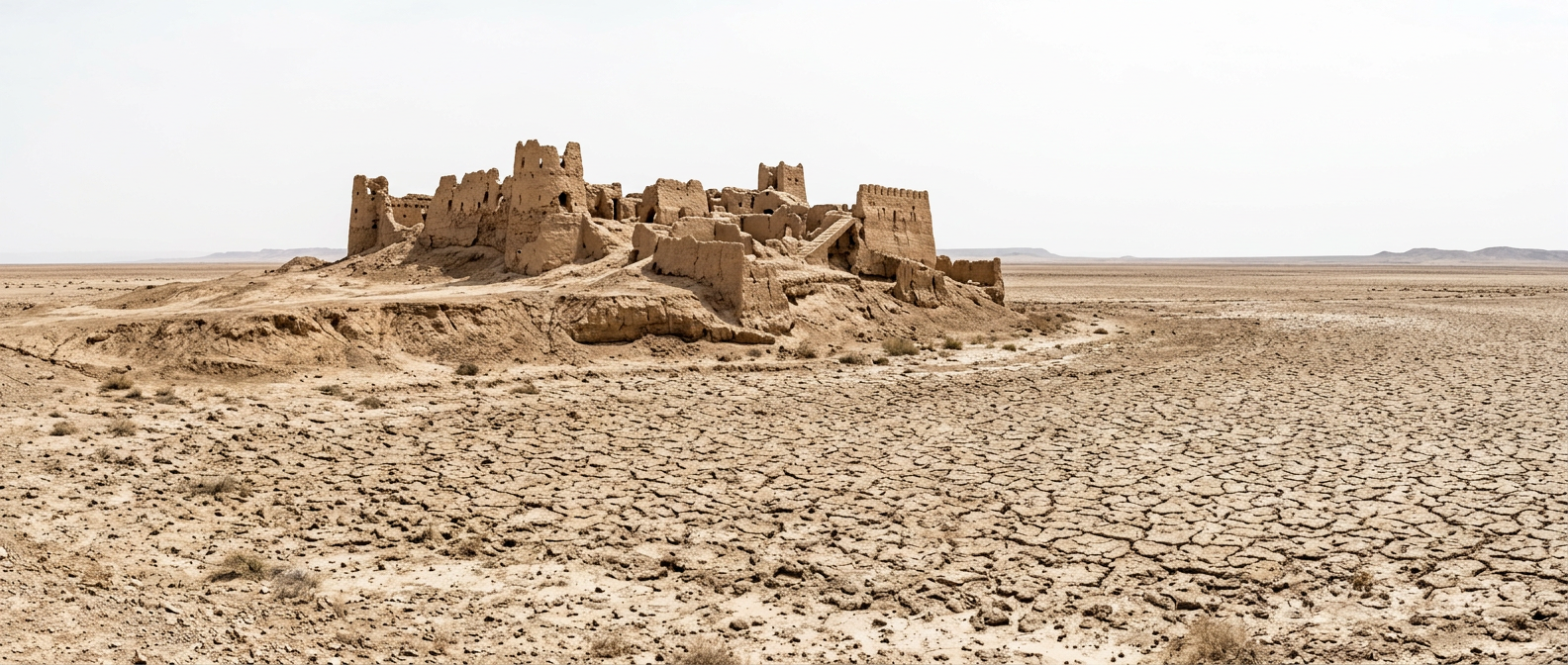
salt crust underfoot, a rusted hull on sand, no water in sight
Reserve a guided trip to Karakalpakstan, ten nights on a dry sea and a fortress belt
The reservation covers ten nights in the northwest of Uzbekistan with a driver and a guide on all ten of them, from $3,487 per person on two sharing, and the border zone permit is applied for the week you confirm. You go because the printed map is out of date by about 125 miles, and because the ground between the old shoreline and the present one is walkable salt with a grounded fishing fleet still standing on it.
Send a booking requestThe Pine Gazette answers every request within one business day.
Karakalpakstan fills the northwest third of Uzbekistan and holds about a twentieth of its people. Most travelers who reserve a guided trip to Karakalpakstan come for one photograph they have already seen, and go home talking about the other half of the republic they had not heard of. The capital sits on the left bank of the Amu Darya at 42 degrees north, the latitude of Chicago, and in most years since the late 1980s the river has stopped short of the sea it used to feed. Ten nights buys both halves: the delta and the dry bed at the top of the republic, and the fortress belt of the old oasis east of the river.
This is the first rung of a ladder of twenty seven trips, and everything on it is arranged before you land. Somebody is standing at arrivals with your name. A driver stays with the two of you for ten days, a Karakalpak guide who works in English stays with you the same ten days, and the permit that lets a foreign visitor onto the Ustyurt plateau and the western Aral shore was applied for weeks earlier by the company that runs the trip on the ground. You carry a bag and turn up.
No rung on this ladder is better than the one below it. This one costs what it costs because a guide is paid for every single day and because two vehicles go out to the water instead of one. If you want fewer people around you and more of the day left unspoken for, that is further along the chain, and it is not a smaller trip.
Somebody is waiting at arrival, a guide is with the party most days, and every transfer and entry is held in advance.
No rung is better than another. Each one is a different amount of work for the traveller and a different figure.
- What it costs
- 10 nights, from $3,487 per person.
- What this reserves
- On this rung Pine Gazette Bookings LLC books the two vehicles and their drivers, the guide for all ten days, every bed including the two nights in a yurt on the seabed, all site entries and the Ustyurt permit, and it books no air ticket of any kind.
- Shape of the booking
- It reserves as a private ten night booking for two people, eight nights in beds under a roof and two in a yurt with a pit latrine, one vehicle and driver assigned to you throughout, a second vehicle added for the two days on the seabed, and one guide who stays with you from the first morning to the last.
- Who books it
- Somebody booking this wants a landscape that changed inside one human lifetime, and wants another party to carry the permit, the fuel, the water cans and the decision about which track to take.
- Why somebody chooses another rung
- If you would rather keep one base, wake up without a plan and take the vehicle out only on the days you feel like it, a lower rung reserves the room and the car and leaves the ten days to you.
- In the figure
- Ten nights of accommodation on two sharing, eight in hotels and family guesthouses with private bathrooms and two in a yurt camp with a pit latrine; a four wheel drive vehicle and its driver for all ten days; a Karakalpak guide working in English for all ten days; the border zone permit for the Ustyurt plateau and the western shore, applied for in your name by the company running the trip; every site entry, including the state art museum in the capital and four fortress sites in Ellikqala; a second vehicle running in convoy on the two seabed days; breakfast every morning and dinner on the seven nights where the camp kitchen is the only kitchen; drinking water at four liters per person per day on desert days; a mattress, quilt and clean linen in both yurt camps; the ground transfer from your arrival in the capital of the republic to the first hotel, and back at the end.
- Not in the figure
- Air travel, which you book yourself, and a round trip out of the American South to Tashkent runs about $1,150 to $1,850 depending on the month and the routing; seats on the overnight train north from Tashkent, which the operating company will hold on request, $30 to $95 each way; lunches, $4 to $12 a head outside the towns and up to $20 in the capital; dinner on the three nights the party eats out, $8 to $25 a head; drinks other than the water supplied, $1 to $6 each; tips for the driver and the guide, $80 to $200 across the ten days; laundry at the city hotel, $6 to $15 a load; a room to yourself instead of two sharing, $340 for the trip; camera permission at two of the museums, $3 to $10; cash in local currency for the bazaar and for both yurt camps, which take nothing else.
- Who should not book it
- Two of the ten nights are in a yurt with no running water, no shower and a pit latrine about forty steps from the door, and the generator runs roughly three hours after dinner. The drive out to the water is about 155 miles of unmarked track, seven to eight hours each way, most of it at 15 to 25 miles an hour over ridged salt, and there is no point on it where a vehicle turns back quickly. Anyone who cannot sit that long, cannot use a squat latrine, or needs a bathroom within reach at night should take a different rung. The seabed is flat, quiet and the same color for hours together, and people who need the view to keep changing find the middle of that drive very long.
This is a starting figure, worked out for two people sharing a room. Costing the exact days you name runs two to four working days, since the firm operating the trip has to answer first. No air ticket is ever inside it.
The capital, the burial hill and the port that lost its water
The state art museum in the capital catalogs something over eighty thousand items and hangs a few hundred at a time, most of them painted in the 1920s and 1930s by people whose work could not be shown in Moscow and was carried out here instead. It shuts one day a week and your guide builds the ten days around that. Twenty minutes southwest, a burial hill has been in continuous use for roughly two thousand years, and near its crown a brick structure loses a few bricks a year to weather, with a local story attached about the last one. Forty miles south, above the river, a Zoroastrian tower stands on a rise you climb in ten minutes: a ring about 210 feet across, open to the sky, where bodies were laid out for the birds until the eighth century.
Moynaq is 130 miles north on asphalt, close to three hours with one stop. It was an island, then a port, and its cannery packed fish for a fleet of several hundred boats. The sea started dropping when the two rivers feeding it were pulled off for cotton, and it did not stop dropping. About a dozen steel hulls still sit on the bluff below the town, grounded where they were left, the old waterline readable as a change in the color of the ground. The museum in the town holds photographs of that same view with water in it. Your guide will have relatives who worked those boats, which is the difference between being told this and being shown it.
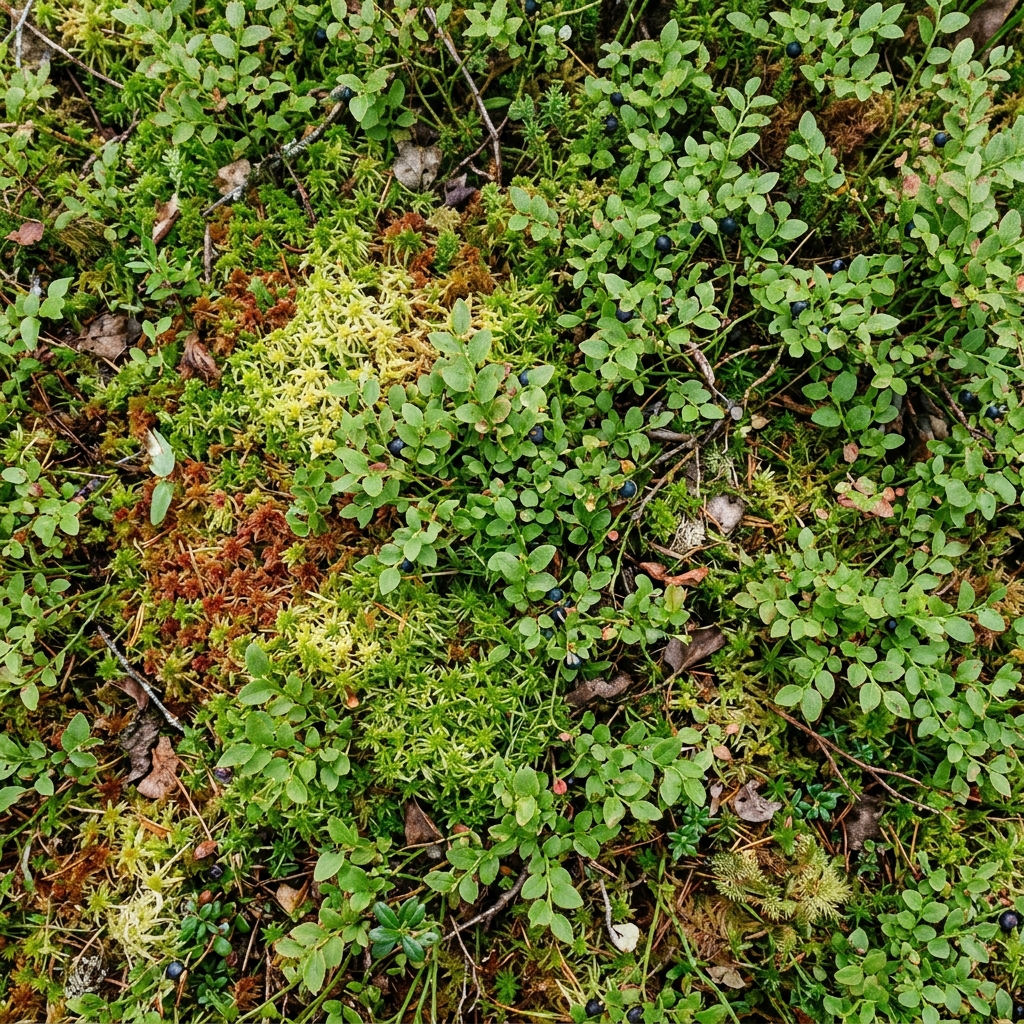
Two nights on the bed of a sea
The run from Moynaq out to the western shore is about 155 miles and takes seven to eight hours. There is no road. The track crosses the old delta first, then the salt crust of the new desert, then climbs the Ustyurt escarpment, a wall of chalk and clay standing 300 to 500 feet above what used to be water, and follows the rim north. Two vehicles travel together because there is nobody to call: after rain the crust carries the first vehicle and gives way under the second, and the recovery is a shovel and the other truck's rope.
The camp is a group of yurts set back from the cliff edge. Water arrives in the truck. There is a pit latrine, a bucket for washing and a generator that runs about three hours after the evening meal. In October the rim reads 70F in the afternoon and 36F in the hour before sunrise, and the wind off the plateau does not stop between the two. There is no light anywhere on that horizon after dark. The water below the cliff carries so much salt that a body floats high in it and dries white, and everyone rinses afterward with what they brought down.
On the second day the vehicles work south along the rim to the delta lakes, where an abandoned settlement of fishermen still shows the walls of a small cannery and a graveyard on the slope above it. Pelicans and flamingos use those lakes on passage in April and again in September. Saiga cross the plateau in numbers nobody at the camp will promise you in advance, and the guide will say so rather than sell you an animal.
- March
- Track still soft in patches; afternoons near 57F, wind most days, salt haze standing off the bed.
- April
- Passage birds arrive on the delta lakes; afternoons 72F, nights near 45F, thirteen hours of daylight.
- May
- Afternoons at 86F and the crust hard all day; camp nights comfortable, dust building through the month.
- June
- 95F in the shade by two, fifteen hours of daylight, seabed driving done early in the day or not at all.
- July and August
- Afternoons of 99F are normal and higher has been recorded; fort climbs happen before eight or are dropped.
- September
- The heat breaks back to 86F, second passage of birds through the lakes, the clearest air of the year.
- October
- Afternoons of 70F, 36F before dawn on the rim, eleven hours of daylight; this is the month most people take.
- November
- Afternoons near 52F, first frosts inland, yurt camps closing from the middle of the month.
- December to February
- Camps shut and tracks unreliable, mornings in the capital at 16F; the trip does not run.
The fortresses east of the river
Ellikqala district, an hour and a half east across the Amu Darya bridge, holds what is left of about fifty raw brick forts put up between the fourth century before the common era and the fourth century after it, when the oasis irrigated its way out into the sand. You will walk three or four of them across two days.
One is a palace complex, an outer wall roughly 550 by 380 yards with three towers still standing at the corner of the residence block; the fired brick is gone and the raw brick has slumped, so you read the plan as topography with corners in it. Another stands on a hill 200 feet above the plain, with an older and larger fort on the flat below it and a third across the gap, all three in view at once. A fourth, from about 2,300 years ago, was built with no towers at all, on the reasoning that a straight wall and enough archers would do. The climb to the hill fort takes twelve minutes and is loose underfoot; from the top the plain runs unbroken in three directions, with the green line of the irrigation canals to the east.
Both nights out here are in a yurt camp below the hill fort, run by one family who cook a single dinner at seven and serve it to whoever is present. There is a block with hot water from a tank. The last two miles of the approach are graded dirt.
The reservation, the invoice and the long leg
Pine Gazette Bookings LLC, which operates under the name The Pine Gazette, is a booking office in New Orleans, LA. It owns no vehicle, no yurt, no hotel room and no boat named anywhere on this page. What it does is take the dates you actually name, put them to the company that runs this trip on the ground, and come back with a figure built against those exact days rather than against a season. That normally lands inside two to four working days, and takes longer only when the permit office is slow.
When you accept the figure, the operating company reserves the beds and the vehicles in its own name, then issues the confirmation and the invoice on its own account and bills you directly. Nothing is paid to this office at any stage, there is no card field on this website, and no deposit is held here.
No air ticket is sold here either. The long leg from the United States is yours to book, and so is the connection north from Tashkent, though the operating company will hold seats on the overnight train if you would rather spend twenty hours on a bunk than sort it out on arrival. Tell us the day you expect to reach the capital of the republic and the ten nights count from that morning.
Reach us on +1 (504) 832-6194 or write to bookings@thepinegazette.com with the dates you have in mind, the number of people and whether you want the two seabed nights or want them swapped for two more in the fortress belt. If something moves after the booking is confirmed, corrections@thepinegazette.com goes to the same two people.
Send a booking request
This form takes booking requests 24 hours a day. A person reads it and answers within one business day. Sending it is not a reservation, it costs nothing, and this office will not telephone or text you unless you ask it to.