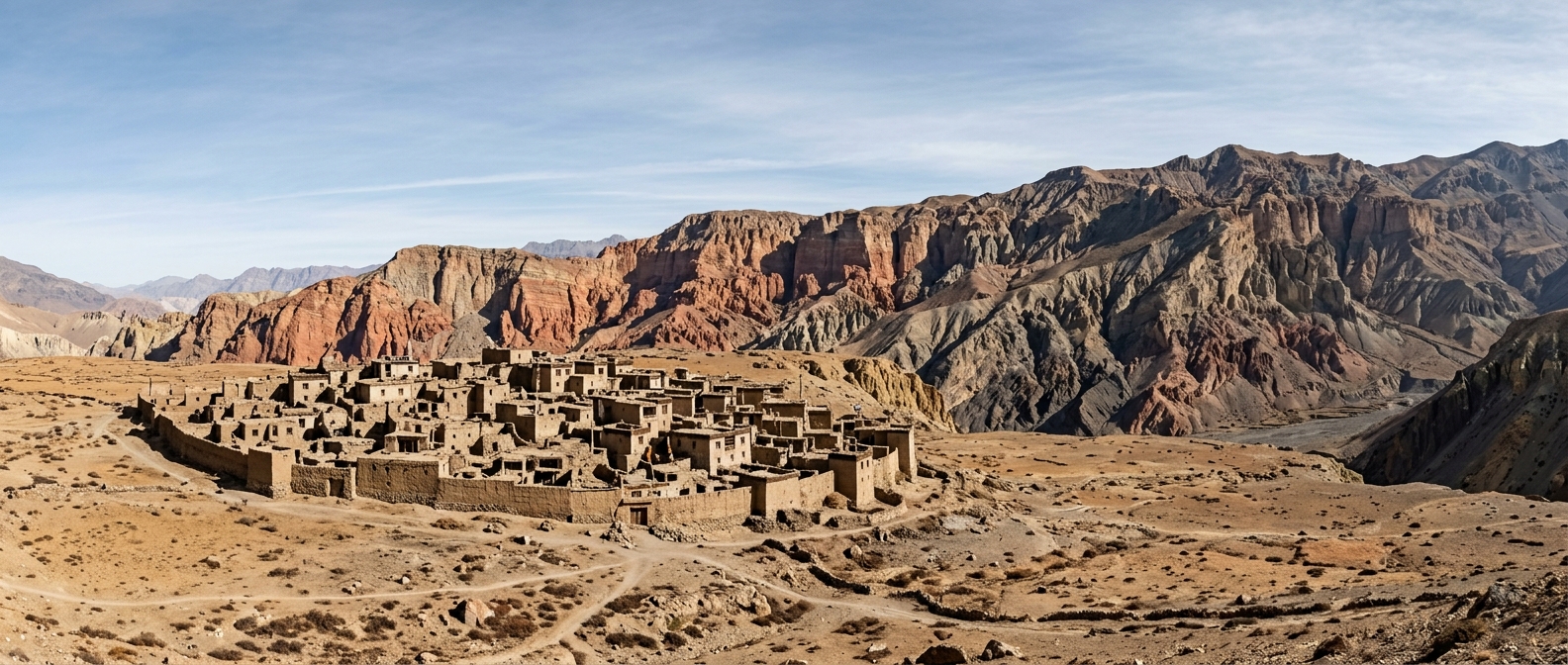
red cliffs, barley walls, wind up the gorge by eleven
Reserve a guided Upper Mustang trip, fourteen nights on the Tibetan plateau
The Pine Gazette reserves fourteen nights in Upper Mustang from $4,405 per person on two sharing, with a guide, a cook and a horseman alongside the party from the first morning to the last. The restricted-area permit is applied for in your name weeks ahead, and the road day up the gorge is arranged with a driver who runs it every week in season. Behind the main Himalayan chain the monsoon is already wrung out of the air, so the walking is dry through July and August when the rest of Nepal is under cloud.
Send a booking requestThe Pine Gazette answers every request within one business day.
Upper Mustang is the part of Nepal that lies behind the mountains instead of in front of them. The Kali Gandaki has cut a trench between two summits over 26,000 feet standing about twenty two miles apart, and everything north of that trench sits in their rain shadow on the southern lip of the Tibetan plateau. To reserve a guided Upper Mustang trip you need a restricted-area permit, and that permit is never issued to a person walking on their own. It is issued to a party of two or more moving with a licensed Nepali guide, through a company registered to work north of Kagbeni.
That requirement is the whole reason this route sits where it does on the ladder rather than further along. Fourteen nights are held as one reservation. Somebody is standing in the arrivals hall in Kathmandu with your name written down, a guide walks with the party every walking day, a cook travels with a stove and cooks twice a day, and a horseman brings five animals for the bags. You carry a day sack and turn up.
Pine Gazette Bookings LLC is a booking office in New Orleans, LA, and it runs nothing. It owns no vehicle, no lodge room, no vessel and no aircraft, and it employs no guide. What it does is take your dates, put them to the company in Kathmandu that actually operates this route and holds the licence the permit is issued against, and hold the reservation in your name. Getting to Nepal is your own arrangement, and this office reserves no flight, on any leg, at any point in the itinerary.
Somebody is waiting at arrival, a guide is with the party most days, and every transfer and entry is held in advance.
No rung is better than another. Each one is a different amount of work for the traveller and a different figure.
Naming your dates and getting a number back on paper takes two to four working days here, because the permit is priced by the number of days the party is inside the restricted area and the operator counts them one at a time before it will quote. A month and a party size on +1 (504) 832-6194 or in a message to bookings@thepinegazette.com is enough to begin. When the trip is confirmed, the operating company invoices you itself, on its own paperwork and in its own name; no money of any kind changes hands in this office.
- What it costs
- 14 nights, from $4,405 per person.
- What this reserves
- On this rung The Pine Gazette reserves the whole fourteen nights as a single booking, the crew of four, every bed, the jeep days, the permit application and the checkpost fees, and it reserves no flight of any kind, on any leg, at any point.
- Shape of the booking
- Held as one reservation: fourteen nights of beds, thirteen in village lodges and one under canvas, twin rooms with two beds, jeeps on the two road days, five pack animals, and four crew who move with the party the entire way.
- Who books it
- Somebody reserves this because they want to walk into a valley that cannot legally be entered alone, and they do not want to be the person assembling the permit, the crew and the road transport to get there.
- Why somebody chooses another rung
- If you would rather set your own start time, eat wherever you stop and settle with each lodge yourself, a rung further along buys much less and hands those decisions back to you, and the ground underfoot is identical.
- In the figure
- restricted-area permit for Upper Mustang, applied for in your name and paid; conservation area entry fee and every checkpost charge on the route; fourteen nights of accommodation, thirteen in village lodges and one under canvas below Yara; a licensed guide with the party on every walking day; a cook and a kitchen assistant travelling with a stove and fuel; five horses and a horseman, for baggage and for anyone who cannot walk a stage; all meals from the first dinner to the last breakfast, with boiled and filtered drinking water; jeeps between Kathmandu, Pokhara and the trailhead and back again; two nights in Kathmandu at either end in a hotel of four floors near the old town; meeting on arrival and every ground transfer by private vehicle.
- Not in the figure
- the round trip flight from the American South to Kathmandu, which is your own arrangement and which this office does not reserve, $1,180 to $1,950; lunches and dinners on the four town nights in Kathmandu and Pokhara, $6 to $22 a meal; hot water and battery charging in the lodges north of Kagbeni, $2 to $6 each time; drinks other than the tea served with meals, $1 to $5; tips for the crew of four, customarily $150 to $260 per traveller over fourteen days; a horse hired for a rider rather than for baggage, $35 to $50 a day; sleeping bag rated for 15 degrees, hired in Kathmandu, $2 to $4 a day; hire of a down jacket, $2 to $3 a day; laundry in the towns, $1 to $3 a kilo; boots, a duffel a horse can carry and the rest of your own gear, $200 to $600 if you are starting from nothing; a local data plan arranged in Kathmandu, $10 to $20.
- Who should not book it
- Nine of the fourteen nights are spent above 11,000 feet and the route crosses a pass at 13,160 feet on foot, with no road within a day of it. Walking days run five to seven hours with about 1,800 feet of ascent and the same amount given straight back, on stony track with loose footing and no shade at all from nine in the morning. Lodge rooms north of Kagbeni are unheated, the walls are one brick thick, and the washroom is often across a yard at 20 degrees before sunrise. The road day up the gorge is nine hours of unsealed switchbacks with drops beside the wheels, and once the party is north of Kagbeni there is no shorter way out than the way it came in.
This is a starting figure, worked out for two people sharing a room. Costing the exact days you name runs two to four working days, since the firm operating the trip has to answer first. No air ticket is ever inside it.
Ten inches of rain a year, and where it does not fall
The wall to the south is Dhaulagiri at 26,795 feet and Annapurna I at 26,545 feet, with the river running between them. Monsoon air pushing up from the Bay of Bengal is wrung out on the far side of that gap, so Lo Manthang takes roughly ten inches of rain in a year, most of it on eight or nine days. Pokhara, two days south by road, takes over 140 inches in the same twelve months. That single fact sets the season: July and August are dry walking weeks up here while the middle hills are shut under cloud, and the lodges stay open straight through both.
The ground looks nothing like the rest of the country. The cliffs are red, grey and ochre in bands, coloured by iron in the sediment, and they stand in fins and pillars where water has taken the soft layers out from between the hard ones. Trees exist only where somebody planted and watered them: poplar and willow in lines as windbreaks, apricot in the yards, every one of them inside an irrigated wall. Outside the walls there is grass at ankle height, gravel, and nothing above knee height for miles at a stretch.
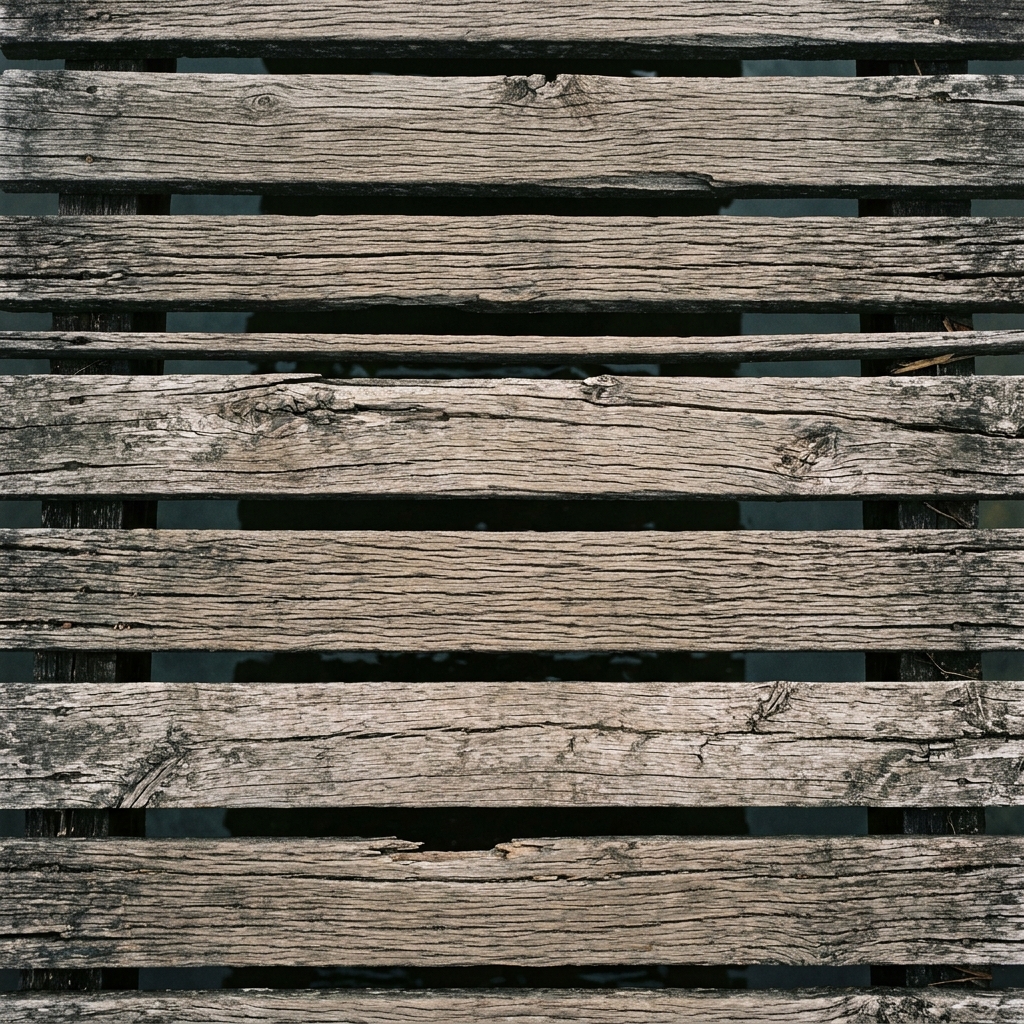
The road up the gorge and the days on foot
The itinerary uses the road as far as the road is useful and stops there. Kathmandu to Pokhara is about 125 miles of paved highway and takes seven hours because of the ridges it has to climb over. Pokhara to the trailhead is the long one: nine hours of unsealed switchbacks in a jeep, gaining about 6,000 feet, the last three of those hours inside the gorge itself where the track runs on ledges above the water. From Kagbeni north, the party walks.
Walking days are five to seven hours, with roughly 1,800 feet of climbing and most of it handed straight back, because the route crosses side valleys rather than following a single one upstream. The high point is a pass at 13,160 feet on the fifth day, and three other days spend several hours above 12,000 feet. The wind sets the timetable more firmly than the gradient does. Air is drawn up the gorge from about eleven in the morning at twenty five to thirty miles an hour, so the crew wakes the party at half past five, breakfast is at six, and the day's walking is finished by early afternoon.
- March
- Road open again from the south, nights near 15 degrees at Lo Manthang, apricot not yet in flower
- April
- Willow and apricot break at Kagbeni, wind up by eleven, days near 55 degrees
- May
- Sun up at a quarter to six, three days of masked dances inside the walled town, nights still below freezing
- June
- Barley a foot high in the irrigated fields, days near 68 degrees, first cloud building on the wall to the south
- July
- The monsoon breaks on the far side of the mountains and about an inch of it reaches this valley
- August
- Dust settled, the Kali Gandaki running brown and loud, lodges no more than half full
- September
- Fields cut and threshed in the yards, nights back below freezing, air clear to the horizon
- October
- Days near 50 degrees, wind hard by ten in the morning, most lodges closing in the last week
- November
- The track north of Ghami ices over in the shade and stays shut until March
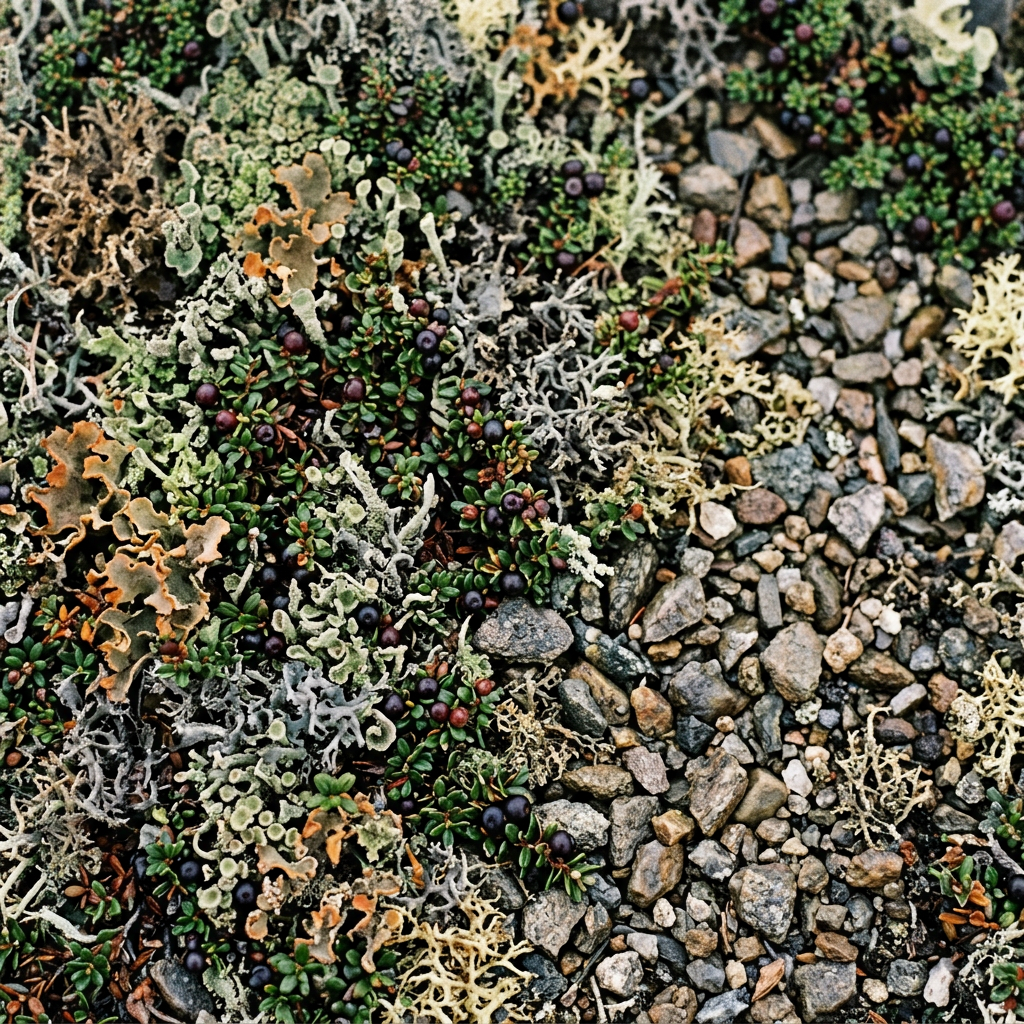
Lo Manthang, Chhoser and the four nights at the top of the valley
Lo Manthang stands at 12,500 feet inside a mud brick wall about twenty feet high with one gate in it. Around 150 houses sit inside that wall, packed side to side, with alleys wide enough for a loaded horse and very little more. The five storey house at the center belonged to the line that held this valley as a kingdom until 2008. Three assembly halls stand within a few minutes' walk of it, one of them holding clay figures close to twenty feet tall, lit by whatever comes through the door and by butter lamps.
The party has four nights up here and uses all of them. One day goes north to Chhoser, where a cliff face has been dug into forty four rooms on five floors, connected by ladders, with window slots cut for light rather than for looking out. Nobody has settled who cut them or when, and a good guide says exactly that rather than inventing a date. Another day goes east to Tsarang, where a fortress and an assembly hall stand on the lip of a gully about 200 feet deep, and the walk back crosses open ground where you will see nothing taller than a wall for two hours. If your dates fall in the right three days of May, the walled town holds its masked dances in the square; the operator knows those dates a year ahead and will tell you plainly whether yours line up or miss.
The permit, the crew and the paperwork behind the fourteen nights
The restricted-area permit is applied for in Kathmandu by the operating company, against its own licence, in your name, using details it asks you for several weeks ahead. It is checked at the post below Kagbeni on the way in and again on the way out, and the post keeps the party's names on file. The conservation area fee is separate and is paid at the same office on the same morning. Neither document is yours to chase. The operator obtains both as part of running the trip and both sit inside the figure quoted to you.
The crew is four people and they are with the party the whole way. The guide is licensed, speaks the local dialect as well as Nepali and English, and is the person who deals with lodge owners, checkposts and any change of plan on the ground. The cook and the kitchen assistant travel with the party, carry a stove and fuel, and put out dinner at seven in whichever kitchen they have been given. The horseman brings five animals; they take the duffels every day and take a walker as well on any stage where somebody has run out of legs. Nothing about that arrangement is optional on this rung, and it is a large part of why the figure sits where it does.
Send a month, a party size and the width of your window to +1 (504) 832-6194 or bookings@thepinegazette.com and the reservation can be started from that alone. If a message bounces, corrections@thepinegazette.com reaches the same two people. Pine Gazette Bookings LLC is at 2450 Severn Avenue, Suite 312, Metairie, Louisiana 70001, and the reply will come back in writing with the permit days counted and the figure held against your dates.
Send a booking request
This form takes booking requests 24 hours a day. A person reads it and answers within one business day. Sending it is not a reservation, it costs nothing, and this office will not telephone or text you unless you ask it to.