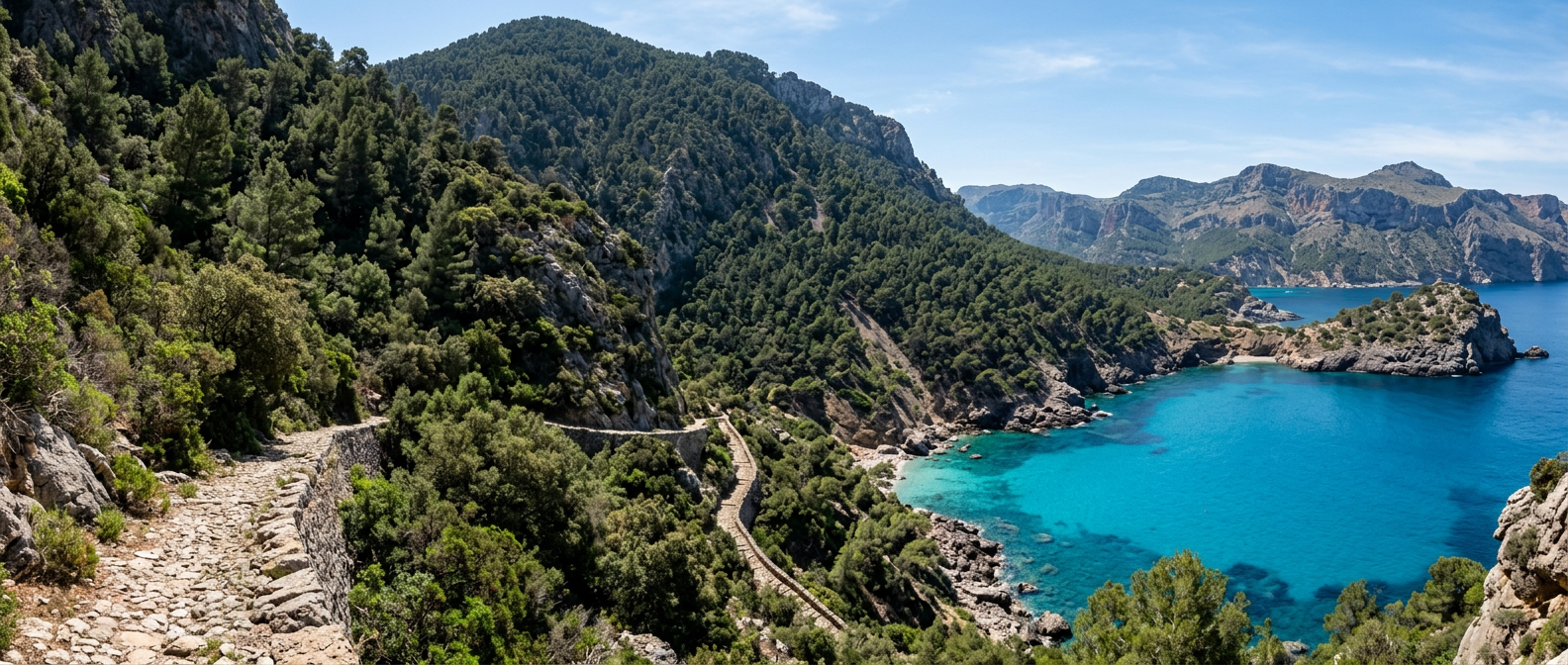
slate roofs, cobbled mule paths, chestnut smoke, warm shallow gulf water
Reserve a ten night Pelion peninsula trip from the mountain villages to the sea
Ten nights on the Pelion in four villages, ridge first and water last, with every room, every road transfer, two trains and one day on a small vessel settled before you leave, from $2,864 per person on two sharing. The peninsula is a hook of mountain rising to 1,624 meters, a shallow gulf on its inside and open Aegean on its outside, and the two coasts sit forty minutes apart by road. Nobody travels with you on any of the ten days.
Send a booking requestThe Pine Gazette answers every request within one business day.
Reserve a ten night Pelion peninsula trip on this rung and what stands settled before you leave is four rooms, every road transfer, two trains, one day on the water and the keys to two buildings that are otherwise locked. Nobody travels with you. The Pine Gazette puts the reservation in and reads the answer; the company that actually runs the trip sends you its own invoice, on its own paperwork, in its own name. Not one room, van, boat or aircraft on this page belongs to Pine Gazette Bookings LLC, and not a cent of it passes through this office at any point.
The nights run mountain first and water last: three in Makrinitsa at 600 meters above the gulf, three in Tsagarada on the Aegean side, two in Zagora among the apple terraces, then two in Milina down on the sheltered water, where the last full day is spent on a boat. Four rooms, four moves, and on every move the van takes the bags while you are free to walk out of the village on the old paths instead. The order is not arbitrary. It puts the day on the water at the end and on the inside coast, which stays workable in weeks when the outer shore does not.
Getting yourself to Greece is a ticket you buy, and no flight is arranged here. What the plan asks of that ticket is only that it lands at Athens or Thessaloniki, because the ten nights open in Volos and the rail seats north with the change at Larissa are reserved in your name as part of this. Nothing leaves New Orleans, Louisiana for either city without at least one change, so price the two ends separately. Send the fortnight you could travel and how many of you there are, and a figure on paper comes back inside two to four working days, because in the shoulder months the houses in Tsagarada and Milina answer at their own pace. Call +1 (504) 832-6194 or write to bookings@thepinegazette.com.
Every room, train, boat and entry is booked before departure. No guide anywhere, and nothing to work out on the ground.
No rung is better than another. Each one is a different amount of work for the traveller and a different figure.
- What it costs
- 10 nights, from $2,864 per person.
- What this reserves
- On this rung The Pine Gazette reserves the four rooms, the seats on the main line north from Athens, the narrow gauge run up to Milies, every van between villages, the day on the water out of Milina and the opening of two locked buildings, and it reserves no flight, no guide on any morning, no meal past the breakfasts and one fixed table, and nothing at all on the eight free afternoons.
- Shape of the booking
- One room held in each of four villages for two people, three nights in Makrinitsa, three in Tsagarada, two in Zagora and two in Milina, with a van moving the bags on the four change days and the day on the water carried under the operating company's own passenger licence.
- Who books it
- A person reserving this wants the beds, the seats and the water day settled on paper first, and then ten days in which nobody tells them when to be downstairs.
- Why somebody chooses another rung
- Anyone who wants somebody walking the stone paths beside them and reading the timetable for them belongs on rung one, and anyone who would rather hold four rooms and work out the buses, the boat and the ridge road alone should read rung five before this page.
- In the figure
- Ten nights of rooms in four villages, two people to a room, three in Makrinitsa, three in Tsagarada, two in Zagora and two in Milina; breakfast every morning, which in Zagora means the house apples cooked down with walnut and a hard yellow cheese cut at the table rather than a counter you help yourself from; reserved seats on the main line north from Athens and back, with the change at Larissa; seats on a fixed departure of the six hundred millimeter gauge line from Ano Lechonia up to Milies, ninety minutes for fifteen kilometers; every van between the four villages, including the ridge crossing at Hania and the run down the east side; one day on a small vessel out of Milina to the gulf islands, taking twelve people, held by the operating company under its own passenger licence and billed by that company; the opening of the village library at Milies, which is otherwise locked, and entry to the historical collection at Zagora; one dinner at a fixed hour in Zagora, laid for the whole house at once at half past eight; your bags carried up in Makrinitsa, where the van stops at the square and the room is above it; a paper map of the mule path network with the water points marked and the walking times between villages written in by hand; a local number answered from seven in the morning to ten at night on every day of the ten.
- Not in the figure
- The flight, which you buy yourself and which figures at $980 to $1,640 for a round trip out of the American South across May, June, September and October, rising to $1,350 to $2,180 through July and August; lunch on each of the ten days, $8 to $17 a head wherever you stop walking; the nine dinners nobody has laid a table for you, $14 to $30 a head; wine or tsipouro with a meal, $3 to $8 a glass, and a small bottle with its plate in Volos, $4 to $7 a round; a small hire car on the free days, $30 to $62 a day plus $6 to $9 of fuel; taxis where you would rather not wait for the bus, $10 to $35 a run; a bed and shade on the organized beaches, $8 to $18 a day; the archaeological collection in Volos and the box at any monastery gate, $3 to $8; laundry, which comes back the following afternoon, $10 to $18 a load; a room to yourself for the ten nights, $360 to $520 for the stay; what you hand the driver and the boat crew at the end, $30 to $70 across the trip.
- Who should not book it
- The cobbled paths are the reason people come here and they are also the difficulty: the one from Tsagarada down to Damouchari gives up about 450 meters in three kilometers on stones set for mule hooves in the 1880s, and they stay slick under the trees for an hour after rain. Makrinitsa is built up a slope with its lanes as stairs, and the room you sleep in sits between eighty and two hundred steps above the point where the van can stop. The road between the two coasts crosses the ridge at Hania near 1,200 meters and gives that height back in eleven kilometers of switchbacks, which will find anybody who reads in a car. Evenings in these villages finish early, the last bus down the mountain leaves in the afternoon, and after ten there is the square and then nothing.
This is a starting figure, worked out for two people sharing a room. Costing the exact days you name runs two to four working days, since the firm operating the trip has to answer first. No air ticket is ever inside it.
Two coasts and the ridge between them
Makrinitsa hangs on the western slope with the whole gulf laid out below it, and from the marble fountain in its square, cut in 1809 with four lion heads, you can watch weather cross the water two hours before it arrives. The lanes above that square are steps, so vehicles stop where the road ends and everything after that is carried. Portaria is twenty minutes further up and the road keeps climbing to the ridge at Hania, near 1,200 meters, where the beech starts and the temperature drops eight or ten degrees from what you left at the shore.
Over the top the ground falls to the Aegean and does it fast. Tsagarada sits at about 500 meters with the water a thousand feet below it and three kilometers of road holding its four hamlets together. Damouchari, straight down from there, is the one natural harbor on this whole eastern shore, a pocket of grey pebble with a ruined tower over it and eleven houses. Twenty minutes south, Mylopotamos is two coves joined by a hole worn through the rock, and you can swim from one to the other on a still morning in June. North of Damouchari the path to Fakistra drops through holm oak for twenty five minutes to a beach you have to want, with a cave in the cliff above it that villagers used to teach children in when teaching was not permitted.
The stone paths and what they were laid for
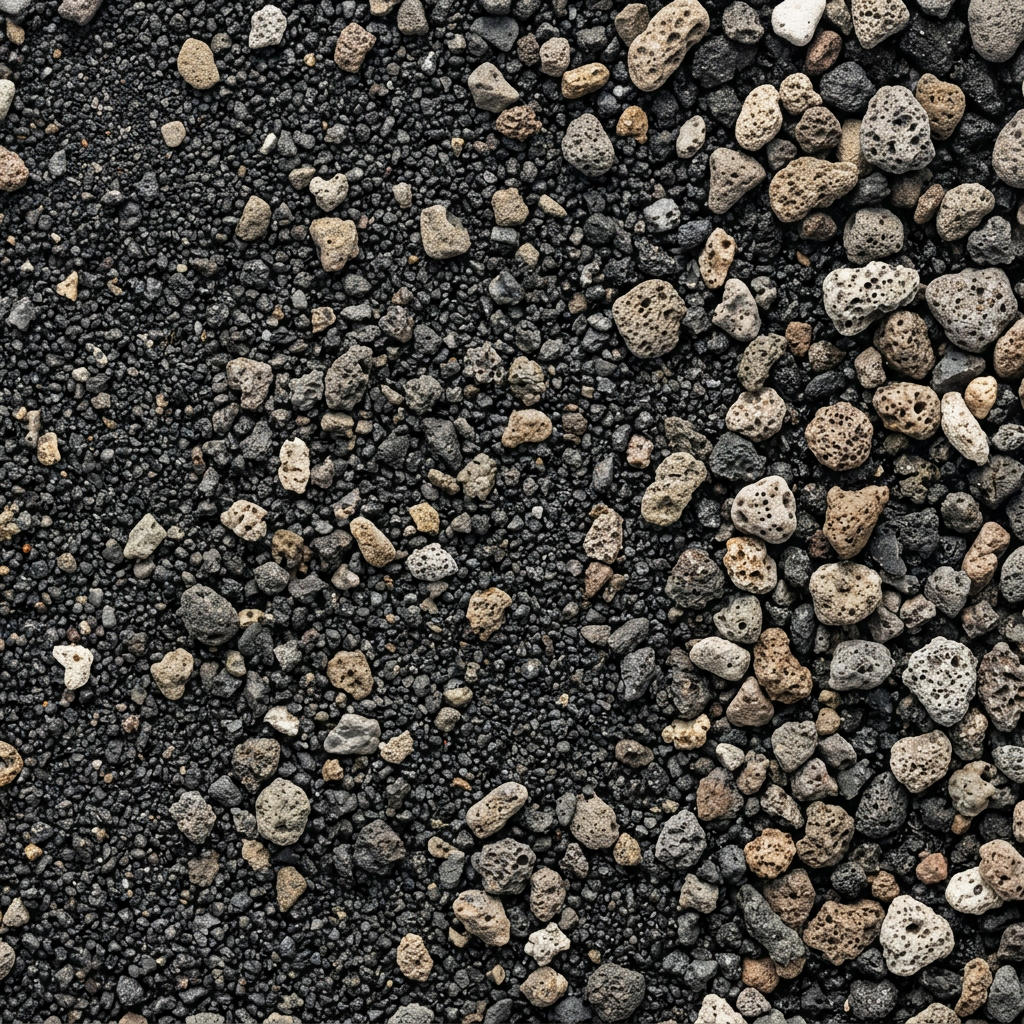
The kalderimia are not walking trails that somebody invented for visitors. They are the road system this mountain used before the road system, paved in slabs set on edge, wide enough for two loaded mules to pass, and they carried apples, olives, chestnut and raw silk down to the water for four hundred years. The mapped network still runs to a couple of hundred kilometers, some of it swallowed by asphalt, some of it rebuilt in the last fifteen years by people who remember what the stones were for.
Two are worth the ten nights on their own. Milies to Vyzitsa is a gentle two kilometers under plane trees, thirty five minutes, with a fountain at the halfway point that has run since anybody can say. Tsagarada to Damouchari is the serious one: three kilometers, about 450 meters of descent, an hour and a quarter if you do not stop, and the last third is bare stone in full sun. In Kissos, on the way north, the church of Agia Marina was finished in 1750 and its carved screen took a workshop from Epirus the better part of four years.
- April
- Ground wet under the beeches, water audible on every path, sea about 63 degrees, and two of the four village kitchens shut until the middle of the month.
- May
- Thirteen and a half hours of light by the last week, air in the low seventies, chestnut fully in leaf, and every eastern path walkable from breakfast to dusk.
- June
- Gulf water near 73 degrees, the arch at Mylopotamos empty on a weekday morning, and the narrow gauge line moving up to its full week.
- July
- Low nineties on the shore and eight degrees down in Zagora, north wind on the outer coast for three or four days at a time, walking before ten and after six.
- August
- Gulf water about 79 degrees, every village full around the fifteenth, parking in Makrinitsa gone by nine in the morning, and the boat day kept to the inside coast.
- September
- The month this plan is built around: water still near 77 degrees, twelve and a quarter hours of light, apples coming off the Zagora terraces and trucks on the road at six.
- October
- Eleven hours of light, first rain on the east slope about mid month, chestnut husks all over the road at Tsagarada, and the last rooms closing after the twentieth.
Fifteen kilometers on six hundred millimeter gauge
The line up the mountain was laid out by an Italian engineer named Evaristo De Chirico, whose son grew up to paint empty squares, and it opened in sections between 1895 and 1903. The gauge is six hundred millimeters, which is narrow enough that the carriages feel like a room rather than a corridor. The surviving run goes from Ano Lechonia to Milies, fifteen kilometers, ninety minutes, climbing to about 250 meters through olive terraces and then chestnut, over six masonry viaducts and one curved iron bridge above the Taxiarches gorge that De Chirico built bent in plan because the ground gave him no straight line. Your seats are on a fixed departure, and the timetable thins to weekends outside high summer, which is one of the two things that fixes the shape of your ten nights.
Milies at the top is worth the arrival. The church of the Taxiarches, finished in 1741, has clay amphorae built into its walls with their mouths open to the nave, and a word spoken at the front of it carries to the back without effort. Across the square, the village library was founded in 1814 and holds about three thousand volumes, a good number of them printed in Venice; it is kept locked and the operating company arranges the hour it opens for you.
Zagora apples and the day on the gulf
Zagora spreads over four quarters at around 500 meters and grows the small firiki apple, long rather than round, picked from the middle of September into October off terraces held up by dry stone. The growers here have worked as a single cooperative from 1916 onward, and in harvest weeks the road down to the water carries loaded trucks from first light. The village library, founded in 1762 on money sent home by a merchant working in Amsterdam, keeps roughly ten thousand volumes in a stone room with shutters, and the oldest of them predate the building.
Then the mountain lets you go. Milina sits on the inside coast where the gulf narrows, with fishing boats pulled up on gravel and water that goes from ankle deep to swimming in fifteen paces. The last full day is on a vessel taking twelve, out past two low islets to the small island off the cape, where there are no vehicles at all, one monastery built in 1825, and a jetty. Between 1949 and 1953 that island held political prisoners, most of them women, near four thousand seven hundred of them at the worst of it, in tents on the slope behind the monastery. The passage is carried on the operating company's own passenger licence and appears on the invoice that company sends you.
Pine Gazette Bookings LLC keeps an office at 2450 Severn Avenue, Suite 312 in Metairie, LA 70001. It asks the operator, it checks what comes back against every figure printed on this page, and it hands you both. If a distance, a temperature or a date here is wrong, write to corrections@thepinegazette.com and it will be corrected. To begin, send your two possible weeks and the number of travellers, and expect a written figure within two to four working days.
Send a booking request
This form takes booking requests 24 hours a day. A person reads it and answers within one business day. Sending it is not a reservation, it costs nothing, and this office will not telephone or text you unless you ask it to.