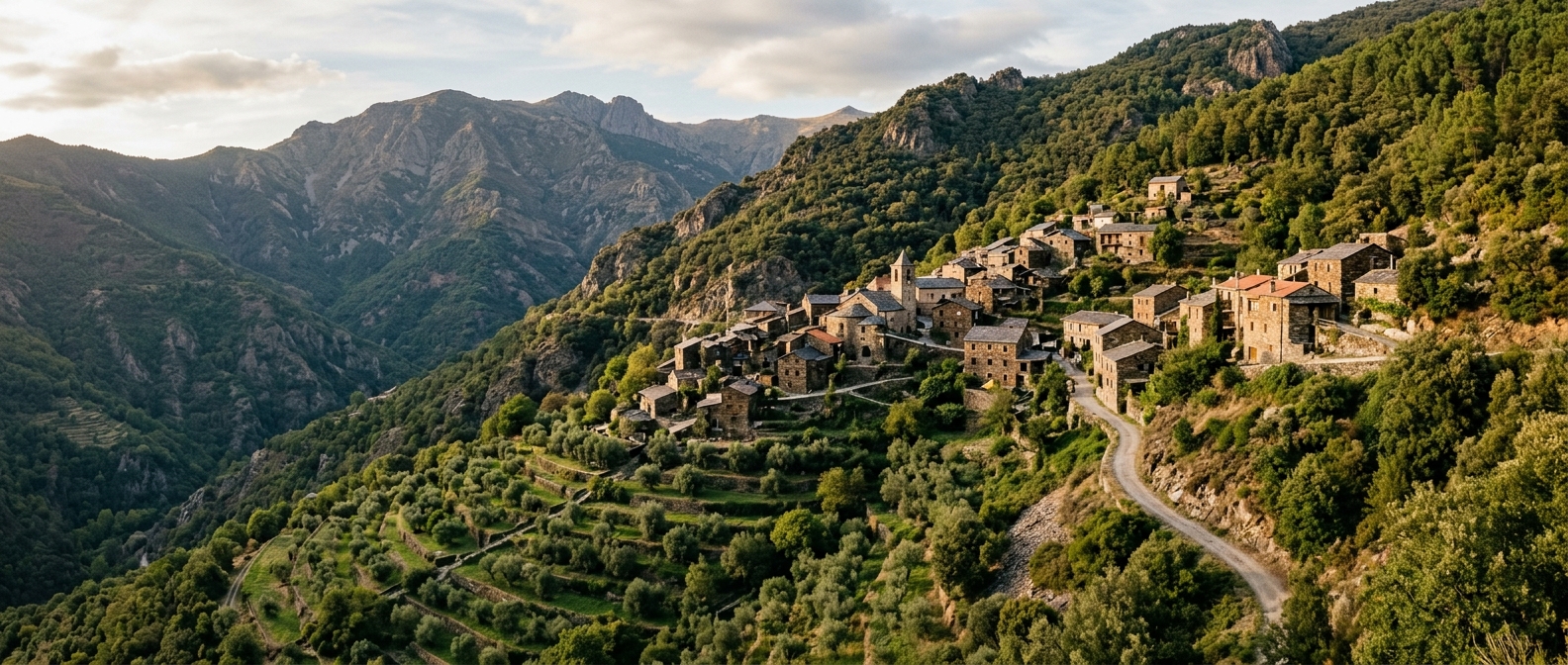
water running down the middle of the street after midnight
Reserve nine nights in the Sierra de Gata, Spain
Nine nights are held for you in two stone villages of the Sierra de Gata, five in San Martín de Trevejo and four in Robledillo de Gata, from $3,835 per person on two sharing. The rail from Madrid, the road transfer, the car and the two visits that will not take a walk in are all set before you leave home. What that buys is a valley where three villages speak a language of their own and where the road between the two ends of your stay takes ninety minutes to cover thirty miles.
Send a booking requestThe Pine Gazette answers every request within one business day.
Nine nights in the Sierra de Gata sit on the third rung of the five this office keeps, which means the trip is arranged in full and accompanied by nobody. Five nights are held in San Martín de Trevejo and four in Robledillo de Gata, at opposite ends of a range that runs about thirty five miles along the Portuguese border in the far northwest corner of Cáceres province. The rooms are booked, the rail out of Madrid is booked, the car is booked, the two visits that will not take a walk in are booked, and once the transfer sets you down in the square on the first afternoon you deal with nobody from the arrangement again until you hand the keys back.
That is the whole proposition, and it suits a particular person. Nobody knocks at eight to say the day has started. Nobody translates the wine list at the bar or explains the difference between mañegu and lagarteiru, which are the speech of San Martín and the speech of Eljas, eight miles apart and not the same thing. What you have instead is nine days with the logistics already taken out of them.
If that sounds like a thin offer, look at what the ground here asks of a visitor. There are two buses a week out of San Martín. The road up from the plain gains about 1,500 feet in seven miles. Half of what is worth seeing is opened by whoever keeps the key, and the mill at the eastern end of the valley presses only from the middle of November. Rung three is the sensible answer to a valley shaped like this one: every arrangement that needs a telephone call in Spanish is made months ahead, and everything after that is yours.
Every room, train, boat and entry is booked before departure. No guide anywhere, and nothing to work out on the ground.
No rung is better than another. Each one is a different amount of work for the traveller and a different figure.
- What it costs
- 9 nights, from $3,835 per person.
- What this reserves
- On this rung the office books the two guesthouses, the Madrid rail both ways, the station transfer, the car and the two entries that must be arranged in advance, and it books no guide, no daily program and no air ticket.
- Shape of the booking
- The reservation is one double room for five nights in San Martín de Trevejo and one for four nights in Robledillo de Gata, two rail seats each way, one small car held for eight days and two timed entries; you move house once, on the fifth morning, and you drive that move yourself.
- Who books it
- Somebody books this because they want all nine days to be theirs from breakfast onward, without losing the first two of them working out how to reach a village of eight hundred people that has two buses a week.
- Why somebody chooses another rung
- If you would rather have somebody beside you who knows which of the two tracks to Trevejo is driveable after a wet week and who can order at the bar in Spanish, take a rung one or rung two trip instead, because here you are the one reading the map at the fork.
- In the figure
- Nine nights in two family run guesthouses, five in San Martín de Trevejo and four in Robledillo de Gata, one double room with its own bathroom in each; breakfast every morning at both houses; second class rail seats from Madrid to Plasencia and back, reserved in both directions; the road transfer between Plasencia station and San Martín on the first afternoon and the return on the last morning; a small manual car held for eight days with unlimited mileage, delivered to the square in San Martín; dinner at the San Martín house on four evenings, one menu, at half past eight; a booked morning at a working olive mill during the pressing season or at the mill museum outside it; a booked hour in the bird hide at the Borbollón reservoir, taken under a permit the operating company applies for in your names about six weeks out; one wash and dry of laundry at the halfway point; printed 1:25,000 sheets for the range with eight route descriptions written out in English; a local telephone number in the valley answered in Spanish and in English for the whole nine days.
- Not in the figure
- The flight, New Orleans to Madrid and back, which is yours to book and which runs $840 to $1,610 round trip depending on the month; lunches, $10 to $24 a head, with the fixed midday menu in the villages at about $15; dinners on the five evenings not listed above, $18 to $42 a head; fuel for the car, $55 to $90 across the eight days at the distances most people cover here; an automatic car in place of the manual, $20 to $26 a day more and it has to be asked for at the time of booking; a second named driver, $9 to $13 a day; entries and small museum fees taken at the door, $2 to $8, with several of the village churches asking nothing; road tolls on the Portuguese side, read electronically at $5 to $16 for a day across; drinks and coffee, $1.50 to $4 an item; laundry beyond the one wash listed, $12 to $20 a load; anything you decide to add once you are standing there.
- Who should not book it
- Both villages are built on a slope and both rooms are up stone stairs, sixteen at one house and twenty two at the other, with no elevator in either, and a wheeled bag has to be carried the last hundred yards over cobbles. The track to Trevejo is two and a half miles of single lane with passing places and an unfenced drop on the outside, and the move between the two villages is thirty miles of continuous bends; anyone who dislikes driving that should take a different rung. July and August run to 100 degrees on the plain below, the villages close from two until five, and an afternoon plan is often not possible in those weeks. Nights here are quiet enough that people who need noise to sleep will notice it, the nearest hospital is fifty minutes away at Coria, and there are stretches of the Árrago valley with no telephone signal at all.
This is a starting figure, worked out for two people sharing a room. Costing the exact days you name runs two to four working days, since the firm operating the trip has to answer first. No air ticket is ever inside it.
The three villages that do not speak Spanish at home
About 5,500 people in the Val de Xálima speak A Fala, a language on the Galician and Portuguese side of the family with three forms: mañegu in San Martín de Trevejo, lagarteiru in Eljas, valverdeiru in Valverde del Fresno. The three villages sit inside eleven miles of one another. Everyone also speaks Spanish, so nothing is shut to you, but the language you overhear in the bread shop at eight in the morning is not the language coming out of the radio behind the counter. It was given legal protection as cultural property in 2001 and it is still handed down at home rather than in a classroom, which is the part visitors tend to ask about. You will hear the most of it in Eljas, the highest of the three at around 2,300 feet and the one with the fewest incomers living in it.
San Martín is built around a granite arcaded square, and water runs down the center of most of its streets in open cut channels. They feed the irrigation terraces and the old mill leats below the village and they run all year. One consequence is that the village makes noise at night with nobody awake in it. Another is that within a day you stop looking for the crossing stones and simply know where they are.
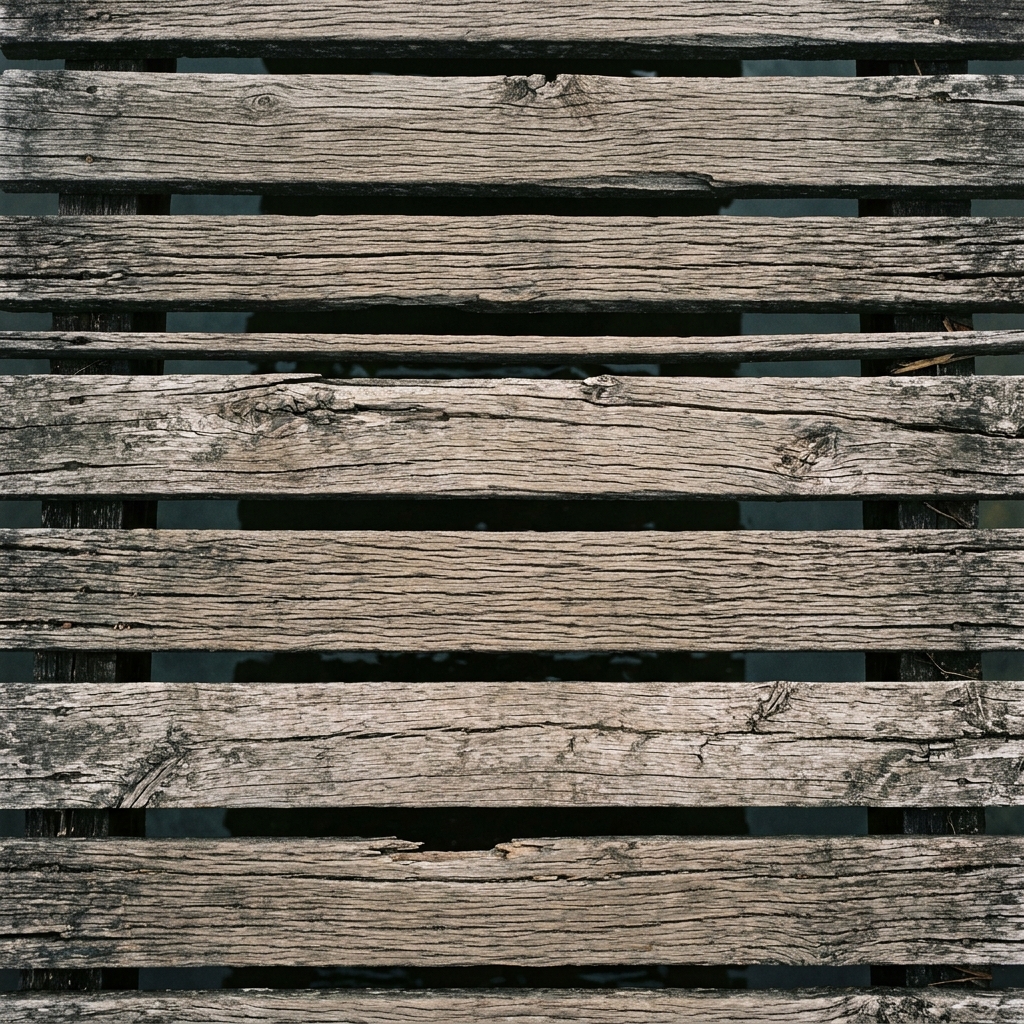
Roads, distances, and the hour and a half it takes to go thirty miles
The car is delivered to the square in San Martín on your first full morning and collected from the top of Robledillo on the last one. Between the two villages the map shows about thirty miles and the drive takes ninety minutes, because the road follows the contour of six side valleys and never runs straight for more than four hundred yards. In daylight, in a small car, none of it is hard. In the dark it is tiring, and most people who do it once decide to make the move before four in the afternoon.
The track up to Trevejo is two and a half miles of single lane with passing places and a drop on the outside that has no barrier along it. Trevejo holds about ten residents, a castle keep standing on a granite tooth above them, and beside the church a row of graves cut straight into the bedrock in the shape of bodies. Nobody charges anything to walk among them. From the pass at Santa Clara the way up Jálama is roughly four hours of climbing and three of descent to reach 4,895 feet, made track for most of it, and from the top on a clear afternoon you are looking into two countries and three provinces at once.
- January
- Forties by day, slate wet for weeks together, the cooperative mills finishing the pressing, two of the four village bars shut for the month
- March
- Almond over and chestnut still bare, water loud in the street channels, about 60 degrees and the best underfoot conditions of the year
- May
- Storks feeding young on the church towers, 75 by afternoon, everything open, flowers the whole length of the Jálama track
- July
- 95 to 100 on the plain at Moraleja, villages closed from two until five, river pools at 68 and full of families after six
- August
- The hottest fortnight and the busiest, houses reopened by people born in them, tables out in the square until one in the morning
- September
- The month that suits most visitors: 82 by day, pools still near 66, walking possible right through the afternoon
- October
- Chestnut harvest, mushrooms on the north slopes, light gone by eight, first fires lit indoors
- November
- Olives taken by hand and net, mills running daily, rain about one day in three, some upper tracks closed by mud
The two houses, and dinner at half past eight
Both houses are family run, one with five rooms and one with four, both stone, both with timber floors that report every step you take. Dinner in San Martín is at half past eight on four of your five nights, one menu, no choice offered, served at a single table for whoever is staying; if you are not down for it there is nothing else in the village after ten but two bars and a bag of crisps. Expect kid goat, a paprika pork spread eaten on bread, chestnut in October, and wine made in the house in a lined vat, which is an ordinary habit of this province rather than something put on for guests. The oil on the breakfast table is pressed from manzanilla cacereña olives grown within four miles of the chair you are sitting in.
Robledillo is smaller and quieter and its house serves no dinner at all. The village has one bar that cooks and it stops at ten. The lanes there run about five feet wide between walls of slate, adobe and chestnut beam, the whole of the old village is protected, and that is why nothing has ever been widened and why you leave the car at the top and walk down with what you can carry.
What is held before you go, and what is deliberately not
Held: two rooms, two rail seats each way in second class, the transfer at both ends, the car for eight days, the olive mill morning, and the hour in the hide at the Borbollón reservoir, where grey herons and white storks nest in numbers on the island offshore. That island is a protected bird site and the hide runs on a permit the operating company applies for in your names about six weeks ahead. Obtaining it is part of running the trip, and it is inside the figure quoted.
Not held: any single day of the nine. There is no program in the envelope and no hour at which you are expected anywhere except the mill and the hide. People who take this rung generally spend two days doing very little, three walking, one on the Portuguese bank of the Erjas, and the rest driving from village to village to find out which of them they would have preferred to stay in.
Give the office the dates you actually want, and say whether you would rather be here in the swimming weather of September or the milling weather of November, because the two trips are not the same trip. A price built against those exact days comes back to you inside two to four working days, itemized, not a range.
Two things stated plainly. Nothing on this page belongs to Pine Gazette Bookings LLC: not the two houses, not the car, not the mill, not the hide over the water. The company that operates the trip holds all of it under its own licences, and it invoices you directly, in its own name and on its own account, so this office never handles a payment and never asks you for one. And no air ticket is sold here. The long leg over the Atlantic is yours to book, and everything described above begins at the moment you reach Madrid.
The Pine Gazette is the name used by Pine Gazette Bookings LLC, an independent booking agency at 2450 Severn Avenue, Suite 312, Metairie, LA 70001, working the New Orleans metro and the rest of Louisiana. Call +1 (504) 832-6194, write to bookings@thepinegazette.com with your dates, or write to corrections@thepinegazette.com if anything on this page is wrong and should be corrected.
Send a booking request
This form takes booking requests 24 hours a day. A person reads it and answers within one business day. Sending it is not a reservation, it costs nothing, and this office will not telephone or text you unless you ask it to.